C-SPAN2 launched on June 2, 1986, carrying its first live Senate session without commentary, without commercials, and without interruption. Forty years later, that commitment to unfiltered coverage remains unchanged.
The numbers tell the story: more than 43,000 hours of Senate sessions recorded, over 169,000 speeches preserved, 23,493 roll call votes documented, and the voices of 359 senators in the archive. C-SPAN operates without government funding, supported instead by the platform operators who have carried it since the beginning, including cable, satellite, and now streaming services.
On June 2, Senate Majority Leader John Thune and Senator Chuck Grassley marked the anniversary on the Senate floor. Grassley, who voted against televising the Senate in 1986, acknowledged that on reflection, it was the wrong call.
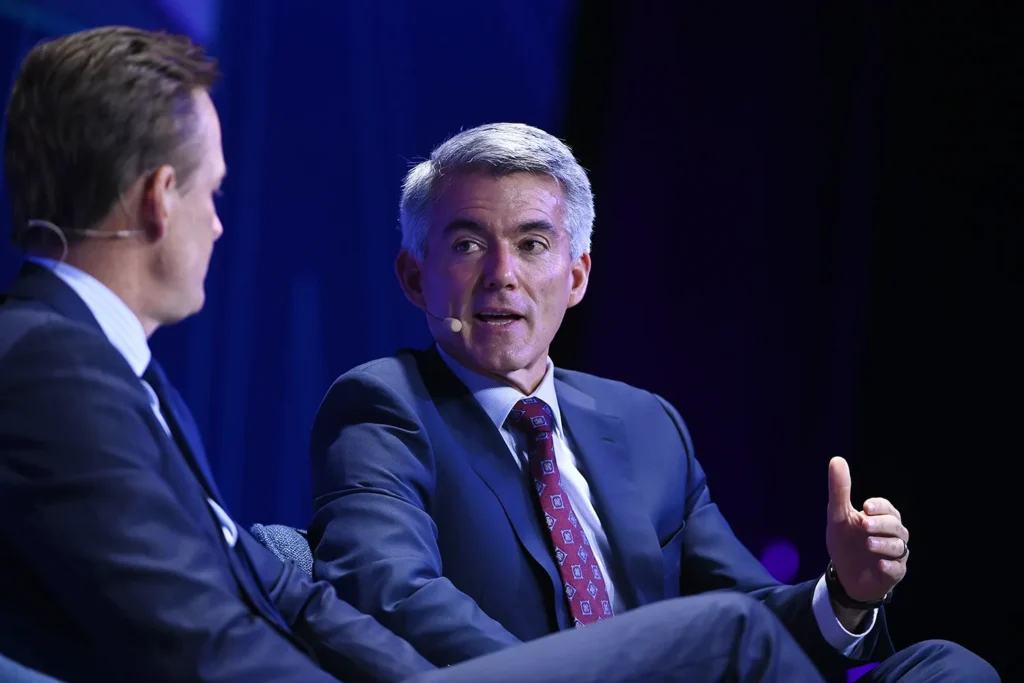
We spoke with C-SPAN CEO Sam Feist about 40 years of Senate coverage, the cable industry’s role in making it possible, and what comes next.
Senator Thune noted that C-SPAN ensures what happens in the Senate is “lost neither to the day’s news cycle nor to history.” In a fast-moving media environment, what makes gavel-to-gavel, unedited coverage so enduringly valuable?
Sam Feist: Senator Thune put it perfectly. In a media environment that rewards the hottest take and the sharpest clip, C-SPAN does something almost radical: we just show you what happened. All of it. No producer deciding which thirty seconds mattered, no anchor telling you what to think about it.
That matters more now, not less. We live in a moment when trust in institutions — including the media — is deeply fragile. Misinformation spreads fast. Context gets stripped away. Gavel-to-gavel coverage is, at its core, a trust-building exercise. When someone asks, “Did Senator X really say that?” — C-SPAN has the answer. The full answer. That’s irreplaceable in a world where video gets clipped, decontextualized, and weaponized. We are the original source.
And there’s something else: the Senate moves at its own pace. Some of the most consequential moments — a late-night debate, a quiet procedural vote, a moment of unexpected bipartisan candor — don’t happen on cue. You only catch them if you’re there for all of them. A perfect example is one of the most legendary and dramatic moments on the Senate floor caught on camera. John McCain’s iconic thumbs-down vote against Mitch McConnell’s “skinny repeal” healthcare bill – in front of a packed Senate floor. It happened on July 28, 2017. And what time was it? 1:29 – in the morning! And we were there. That’s what we do.
What does the audience response tell you about the appetite for that kind of access?
Sam Feist: Our audience surprises people. C-SPAN viewers are among the most engaged news consumers in America — and critically, they’re evenly split between Republicans, Democrats, and Independents. That’s a unicorn in today’s media landscape. What it tells me is that there is a real and durable appetite for direct, unmediated access to government. People want to see for themselves – 34 million Americans watched us on TV last month and many millions more online.
We also hear constantly from viewers — through calls, letters, social media — who say C-SPAN is a place they trust. Not because we’re doing something fancy, but because we’re getting out of the way. When people feel like they’re being talked at or spun, they migrate toward something honest. That’s us.
I’ll also say: our digital and streaming numbers are growing. Younger audiences are finding us — often through a clip that went viral, or through TikTok to the tune of a billion views annually, and then they come back because they want the full picture. The appetite for unfiltered access to democracy clearly crosses generations.
A few Senators specifically called on cable, satellite, and streaming platforms to continue making C-SPAN delivery a priority. How is C-SPAN thinking about reaching viewers across an increasingly varied distribution landscape, and what role do cable operators play in that strategy?
Sam Feist: Senator Grassley, along with Sen. Klobuchar and others, is right to raise that, and I’m grateful for their advocacy. Our distribution partners — cable, satellite, and now streaming — are essential to our mission. C-SPAN receives no government funding. We exist because the cable industry, going back to Bob Rosencrans, John Evans and others from our founding era, understood that a healthy democracy needs an independent window into its own government. Comcast, Cox, Charter, Mediacom, the satellite providers — these companies carry us as a civic commitment. That partnership is the foundation of everything we do.
But the landscape is changing. When a customer cuts the cord and moves to a streaming bundle, they should still find C-SPAN there. We’ve made real progress — all three C-SPAN networks are now available on YouTube TV and Hulu + Live TV, which opens us up to millions of households that wouldn’t have had access before. That is a direct expansion of our democratic mission, and we applaud their commitment to C-SPAN as a public service.
We hope others in the industry will join them. The civic value of C-SPAN doesn’t change based on how you watch it. Whether it’s a cable subscriber in rural Iowa or a cord-cutter streaming on a laptop, every American deserves access to their government in action.
With 40 years of Senate history in the archive, is there a moment — a speech, a vote, a late-night debate — that stands out to you as particularly memorable?
Sam Feist: There are so many. One that stays with me is the debate over the Americans with Disabilities Act in 1990 — senators of both parties wrestling publicly, on the floor, with what kind of country we want to be, and arriving at something lasting. You can go back and watch all of it. Every speech. Every amendment. That’s not just history; it’s a civics lesson that never expires. Another is the moment when John McCain, with his thumbs down motion, ended efforts to repeal the Affordable Care Act.
And there are the less famous moments — a senator speaking at 11 p.m. to a nearly empty chamber about a constituent back home, or a floor debate where the outcome was genuinely uncertain and you can feel it in the room.
What C-SPAN uniquely offers is that you get to decide which moments matter. We don’t make that choice for you.
What does the next 40 years of C-SPAN look like, and what are you most excited about?
Sam Feist: Our democracy needs C-SPAN now more than ever. That’s what I said when I came to this organization, and I believe it more deeply with every passing month.
The next 40 years are about making the promise of C-SPAN available to every American, regardless of where they live or how they get their news. That means continuing to expand our streaming presence, growing our digital platforms, and reaching younger audiences who may discover us through a 60-second clip but stay because they’re hungry for substance. It means investing in our archive and making it genuinely searchable and educational in ways that weren’t possible before. And it means exploring how new technologies — including AI — can help us surface the right content to the right person at the right time, without ever compromising our editorial independence.
But honestly, what excites me most is something simpler: the role C-SPAN can play in rebuilding trust. We are one of the few institutions in American public life that Republicans, Democrats, and Independents all point to and say: that’s fair. In a fractured moment, that’s not a small thing. That’s essential. And I think the next chapter of C-SPAN is about leaning into that harder than ever.