In 2025, the broadband and television industry continued to advance the networks, policies, and programming that keep Americans connected. From rebuilding infrastructure after disasters to shaping spectrum policy debates and delivering standout television, the year reflected steady progress across a wide range of priorities.
Here’s a look at some of the key stories that defined the year.
Keeping communities connected when it matters most
This year, NCTA released “After the Storm,” a docufilm that takes viewers behind the scenes of broadband restoration efforts following Hurricane Helene, the Palisades Fire, and Hurricane Milton. The film follows crews working alongside utilities and government agencies to rebuild critical infrastructure and restore service, highlighting the coordination and preparation required to do the work safely and efficiently.
Prioritizing the security of communications networks
That same focus on coordination shaped broader conversations about protecting communications networks. New reports released at the Telecom Industry Summit documented a significant rise in theft and vandalism targeting broadband and wireless infrastructure, with thousands of incidents disrupting service nationwide. The data reinforced how essential communications networks are to public safety, healthcare, education, and the economy — and why strengthening protections remains a priority.
Where policy and innovation came together
Some of the year’s most important conversations took place at SCTE TechExpo25, where policymakers, industry leaders, and technical experts gathered to discuss the future of connectivity. At the center of the event was NCTA’s The Continuum, a 10,000-square-foot immersive exhibit that demonstrated how advanced technologies and smart policy intersect to power modern networks.
During The Continuum stage discussions, participants explored broadband expansion, network resiliency, cybersecurity, spectrum policy, artificial intelligence, and the evolution of cable as a connectivity platform. The Continuum’s hands-on demos helped bring those discussions to life, offering a tangible look at how today’s networks are built and secured.
Spectrum policy takes center stage
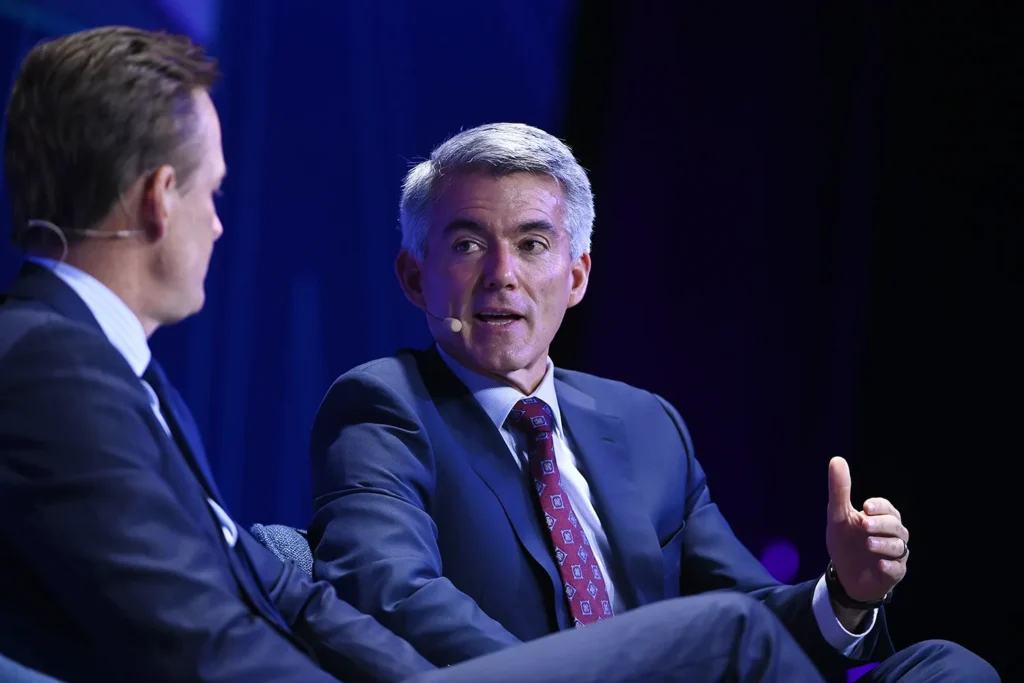
Spectrum remained a central focus throughout the year. Shortly after joining NCTA as President & CEO in September, Cory Gardner called for an “all-of-the-above” approach to spectrum policy that supports both licensed and unlicensed access.
Gardner emphasized Wi-Fi’s critical role in carrying nearly 90% of all data traffic and pointed to the success of sharing models like CBRS. His remarks reflected a broader industry message: forward-looking spectrum policy is essential to meeting growing demand and sustaining innovation.
Wi-Fi’s expanding impact
Five years after the FCC opened the 6 GHz band for unlicensed use, Wi-Fi continues to deliver measurable benefits. The additional spectrum has supported faster speeds, lower latency, and more reliable performance as the number of connected devices keeps growing.
New research released this year also quantified Wi-Fi’s economic impact. A WifiForward study projected that Wi-Fi technologies will support nearly 21 million U.S. jobs by 2032, highlighting the role unlicensed spectrum plays in job creation and economic growth — and the importance of preserving access as demand rises.
CBRS at a policy crossroads
CBRS remained a key policy topic in 2025 as proposals emerged that could reshape the band’s shared-spectrum framework. Over the past several years, CBRS has enabled deployments across a wide range of sectors, including broadband, education, healthcare, manufacturing, and local government.
With a mature ecosystem and hundreds of thousands of base stations already deployed, industry voices stressed the importance of preserving the three-tier model that has allowed CBRS to scale. Changes that disrupt that balance risk undermining existing deployments, particularly for smaller and rural users.
TV and programming: A strong year for storytelling
2025 was also a notable year for television. C-SPAN continued to expand its reach with new platforms, distribution deals, and new programming such as Ceasefire and America’s Book Club, while remaining rooted in its public-service mission.
At the same time, this year’s Emmy nominations highlighted the strength of programming across cable and streaming. NCTA members earned recognition across major categories, reflecting the depth and range of storytelling that continues to resonate with audiences.
More stories from across the year are available at NCTA.com.