
Broadband Affordability: A Look at the Data

The question of broadband affordability is often clouded by misconceptions, with many discussions overlooking key data points regarding internet pricing and household spending. Here's what the data actually reveals: Slower Price Increases Compared to Inflation Internet service prices, as tracked by the Bureau of Labor Statistics (BLS) Consumer Price Index, have increased at a slower pace than overall prices. Since January 2010, internet service prices have increased 13%, while overall prices have increased 46%. This indicates that, when adjusted for inflation, internet service costs have
New NTIA Data Shows More Internet Users Than Ever Before

As America continues to tackle the ambitious task to connect every corner of the country to the internet, the nation’s broadband leaders continue to be hard at work, extending their networks and upgrading speeds in communities of all sizes across the country. While the first few states have had their BEAD plans approved by NTIA, those projects are still a year or so away, as federal funds aren’t expected to be sent to projects until 2025. However, the ongoing hard work to bring next-generation networks to far-out communities moves forward, with new data from NTIA showing positive results for
Comcast Launches ASL Interpreting Services at Xfinity Stores
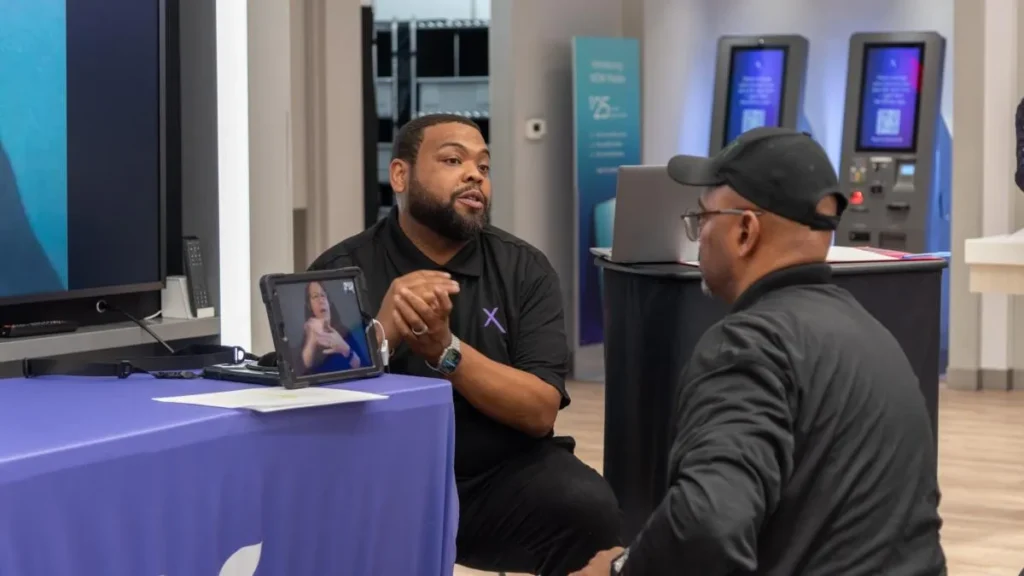
Last week, Comcast announced the launch of American Sign Language (ASL) interpreting services at eight Xfinity store locations in the National Capital Region, with plans to expand the offering nationwide over the course of this year. Accessible tech The service, which uses video conference technology to connect customers requiring ASL support to an interpreter, was piloted last year at select stores. The service will allow the Deaf and Hard-of-Hearing to interact with any Xfinity associate, greatly expanding the customer service opportunities to the community. “We’re thrilled to be able to
Broadband Stats: Cable Helps Close the Digital Divide

With the future of the Affordable Connectivity Program (ACP) up in the air, America’s cable broadband providers remain committed to doing their part to close the digital divide, working to connect low-income households just as they have for over a decade.
With ACP Winding Down, Cable Providers Are Committed to Keeping Customers Connected

Unless Congress acts, the Affordable Connectivity Program (ACP) is set to run out of funds this month. When that happens, millions of Americans will lose a significant benefit that helps them access critical online services like healthcare, education, and job opportunities. With the program's future up in the air, America’s cable broadband providers are reenergizing their longstanding efforts to close the digital divide. Why it matters: To date, ACP has helped connect over 23 million Americans across rural and urban areas, a significant step forward in the nation’s mission to connect everyone
New Report Confirms Cable Broadband Is Deployed Equally Regardless of Income or Race

As the U.S. continues to push forward on the important task of expanding broadband availability to all Americans without discrimination, it is important to understand the current state of play and how broadband networks are deployed today. A new study by the Vernonburg Group released today shows what other studies and analyses have shown before—cable broadband networks are deployed equitably across a wide variety of demographics. Equitable broadband access across income levels, race Data shows that low-income areas have similar access to cable broadband service as their high-income
ACP Has Been Transformational for America

Unless Congress acts, the Affordable Connectivity Program (ACP) is set to run out of funds by May. When that happens, millions of Americans could lose their internet access and access to critical services like healthcare, education, and job opportunities. Why it matters: To date, the program has helped connect over 23 million Americans, a significant step forward in the nation’s mission to close the digital divide. Recently, the FCC surveyed program participants to understand the program’s impact. The full report can be found here. ACP connects those who need it the most Before ACP, 68% of
Lower Prices, More Choices: How American Consumers Benefit From the Competitive and Innovative Broadband Marketplace

In his State of the Union address to the nation tonight, President Biden will acknowledge that Americans are facing inflationary pressures when it comes to groceries, energy bills, and rent costs. One household staple, however, has notably bucked this trend: home internet service. Adjusted for inflation, consumers paid 7.8% less for broadband services in January than three years ago. Meanwhile, average broadband speeds have surged more than 40%. In fact, controlling for the exponential increase in speeds, the real cost-per-megabit for broadband service offerings has declined by roughly 80%
Broadband Stats: Connecting Every American
Closing the digital divide is a complex task that goes far beyond extending broadband service. Cost and digital literacy are key to successful adoption and to making the most of a connection. For years, cable ISPs have offered low-cost broadband adoption programs available to families who qualify for free or reduced school lunches, as well as veterans, individuals with disabilities, and the elderly. In addition to these programs, cable ISPs also often donate devices and offer digital literacy programs to help the previously unconnected take full advantage of their new connection.
The Affordable Connectivity Program Needs a Lifeline

Today brings unfortunate news. Because of dwindling funds in the Affordable Connectivity Program (ACP), the FCC has directed ISPs to stop accepting new customers under the program. It means that, for the moment, households otherwise eligible for ACP will be unable to sign up for the program. And, if Congress fails to appropriate new funds, the program will collapse possibly causing millions of families to lose broadband service they have come to rely on. We continue to be optimistic that Congress can still throw this valuable program a lifeline. ACP’s impact: This program has been wildly