
Fast Internet Opens Doors to New Ways of Educating Students

In most cases, the way that students learn today is completely different than how they received classroom instruction, or did their homework, from even just five years ago. Internet expansion and the rise of digital devices inside and outside of the home have led to new ways of learning in schools, and its also given people who live in the most remote regions of the country the opportunity to learn from experts through distance learning. Cable broadband providers have invested more than $275 billion over the past 20 years to upgrade connectivity and improve internet access, and education is an
Midco Levels the Playing Field for Rural Schools

Stretched along and bordering the Cheyenne River Reservation in South Dakota is the Meade School District, the largest school district in the state, geographically speaking. Spread out over 3,000-plus miles, a district that is this remote has had its fair share of connectivity challenges. Jeff Ward, the district's curriculum and technology director, said that its recent partnership with Midco—which provides internet, phone and cable TV services for communities in South Dakota, North Dakota, Wisconsin, Minnesota and Kansas—has helped level the playing field for their schools. Students now enjoy
New Report Highlights the Important Role Connectivity Plays in Rural America

President Trump was in Nashville, Tennessee this afternoon along with Secretary of Agriculture Sonny Perdue speaking to over 4500 farmers at the American Farm Bureau conference. There he announced the release of the Administration’s ‘Rural Prosperity Report’ that takes a fresh look at ways the federal government can support agriculture, economic development, job growth, infrastructure improvements, technological innovation, energy security, and quality of life in rural America. The report specifically calls out the role broadband plays in enabling increased productivity for farms, factories
Delivering an Education to Millions of Americans

The internet was invented right here in America when in 1969, ARPNET, an early packet switching network, sent its first node-to-node connection between scientists at UCLA and Stanford University. Nearly 50 years later and history has proven that the internet’s creators couldn’t have built a better instrument for research and education. High-speed internet is available to well over 90 percent of American households, contributing immeasurably to improved educational opportunities and distance learning. Few technologies in history have had such a profound impact on how we learn. Internet
Connecting More Americans to the Internet

Today, the internet is essential for education, healthcare, finding a job, and starting a business. To help even more people get online, internet providers across the country are working to provide tools and resources for low-income families to get connected and to overcome the skills gap. Recently, Comcast announced that Internet Essentials, the company’s program to deliver affordable internet to low-income households, is now reaching over one million American families, up from just 750,000 a year ago. Since the program’s inception six years ago, Internet Essentials has expanded eligibility
GCI Makes Telehealth as Easy as Regular Healthcare in Rural Alaska
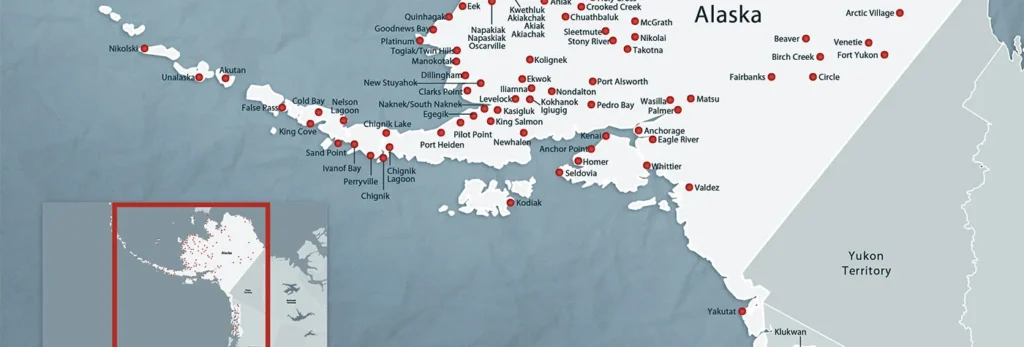
For city and suburban dwellers, receiving medical treatment at a healthcare facility is an easy task that we take for granted. We have hospitals nearby, doctor’s offices and urgent care clinics within an hour from our homes, and ambulances have no problem reaching us within a reasonable timeframe. But for those who dwell in rural and remote areas of the country, gaining access to medical care is a challenge. This is where high-speed internet and a strong telehealth program can make all the difference. We’ve previously covered the efforts of GCI, Alaska’s largest internet service provider, to
Why Isn’t Everyone Online?

55 percent of non-internet users say the reason is they do not have any need for it or have no interest in it It’s hard to imagine a time before the internet. Before we had near-instant access to limitless information, streaming entertainment, and the ability to connect to people across the globe. Over the last 25 years, the world wide web has expanded to a point of virtual ubiquity. But in spite of ready access and a host of benefits, some people still choose not to go online at home. Data from the just-released National Telecommunications and Information Administration’s (NTIA) July 2015
How GCI Internet is Transforming a Rural School District in Alaska

Dan Walker remembers the dialup modem that he used to have on his desk during his early years as a teacher in the Lower Kuskokwim School District, or LKSD, in Alaska about 25 years ago. It was right around the time when schools in the state were starting to get internet access. Now in his second year as superintendent of the district and as a nationally-recognized education technology leader for his work in LKSD, he can proudly share how far they’ve come with technology and internet speed. LKSD serves 22 remote villages spread over a remote area the size of West Virginia. Over 4,200 students
Comcast Celebrates Five Years of Connecting Families with Internet Essentials

It all started five years ago this very month in Chicago when Comcast connected the first low-income families to the internet through the launch of the Internet Essentials program. Fast forward to 2016, and Internet Essentials has spread to many cities across the United States and brought 750,000 low-income households on board, according to their five-year progress report released last week. That’s three million more individuals armed with the power of the internet and its ability to improve lives and open up new economic opportunities. A survey of Internet Essentials customers reports that 95
The FCC’s War on Investment Targets Business Data Services

Another month, another FCC initiative to regulate companies that build networks for the benefit of those that don’t. But rather than wade into the details of Chairman Wheeler’s plan to penalize cable operators for bringing new services, fresh competition, and billions in investment to the market for business data services, we offer the following hypothetical: Imagine a town with a single hotel, say a large Marriott. After years of having a single option for hotel rooms, Kimpton comes to town and builds a new “boutique” hotel – smaller than the Marriott but with modern amenities and cheaper