
NTIA Data: Internet Usage Is Up Among Unexpected Demographic Groups
Americans are making strides in Internet usage among groups of people who have historically been known for their offline status. According to the latest data from 2015 released yesterday by the National Telecommunications & Information Administration, senior citizens increased their Internet usage from 51 to 56 percent between 2013-2015, while children saw an even larger spike, jumping from 56 to 66 percent during the same time period. The digital divide is also shrinking, albeit slowly, for groups of Americans with education up to a high school diploma. African Americans, Hispanics, and
Senate Can Save Consumers from Tax on Internet Access

This week, the U.S. Senate has the opportunity to give nearly every American an important commitment for their future Internet access – a permanent moratorium on taxing Internet access. It’s an important measure that has strong bipartisan support and should be passed into law. It’s officially known as ITFA, or the Internet Tax Freedom Act , and by making it permanent, it ensures America’s Internet users never see their Internet access taxed in the way many other telecommunications services often are. More than just a money-saver, passing a permanent ITFA could have long-term benefits for
Let's Keep the Internet Tax Free

We reported in December that Congress would have a chance in 2016 to pass a permanent extension to the Internet Tax Freedom Act, or ITFA, thereby ensuring that America’s Internet users never see taxes go up on their Internet access. January has come and it’s expected that Congress will soon have the opportunity to permanently prevent state and local governments from taxing Internet access. In our December blog post, we said ITFA would stop Internet access from being exposed to “aggressive tax collectors [who put] at risk all those who rely on the Internet.” The fact of the matter is that the
How to Ensure a Tax-Free Internet

This coming January, Congress will have the opportunity to ensure America’s Internet users never see taxes go up on their Internet access. They can accomplish this by passing a permanent extension of the Internet Tax Freedom Act (ITFA), which prevents states and local governments from taxing Internet access. Keeping Internet access free from burdensome state and local taxes has been an overwhelming bipartisan priority since 1998. After all, if you take a look at your phone or cable bill, you will see how states and municipalities have loaded up a bunch of different fees that can increase the
Valuing the Voices of Experts
Change is easier, and often more effective, when it’s done with you rather than to you. Many times in the past, education reform has come from the top down, without teachers having a voice. We’ll never get “future ready” schools without the active involvement of educators in all aspects of the process. At Cable Impacts Foundation, when we embarked on the project to create “Building Your Roadmap for 21st Century Learning Environments,” a tool education leaders could use to map out and manage transforming their schools into technology-rich hubs of personalized digital learning and 21st century
Timeline: The Impressive Rate of Broadband Deployment And Adoption In America

Univision and Common Sense Media Team Up to Connect Hispanic Families

This past summer at the International Society for Technology in Education conference, FCC Commissioner Jessica Rosenworcel spoke about how 70 percent of teachers today assign homework that requires kids to go online. A statistic like this poses a challenge for many families who don’t have access at home, and widens the homework gap for those kids who are not connected. Seeing these challenges, particularly among its targeted Hispanic audience, Univision Contigo and Common Sense Media have partnered to launch the campaign, “¡Avanzamos Conectados! (Connected, We Advance).” Maria O Alveraz, the
Getting Digital Students Ready for School

As another summer draws to a close, the anticipation of a new school year is starting to build across the country. Back-to-school is a time of new schedules and routines, new classes, new friends and social interaction. This annual period of new beginnings and transitions is the perfect time to reassess how families use TV and online technology and to navigate the digital resources that are out there for parents and their children. “For many children, their real and virtual lives have a tendency to blend together.” Children are introduced to TV and online technology at increasingly younger
How Comcast’s Partnership is Helping to Close the Digital Divide in Connecticut
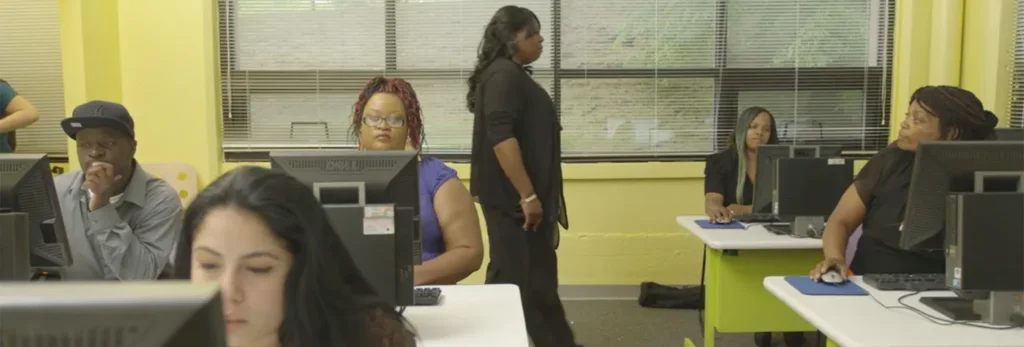
These days, it’s hard to imagine life without the Internet. If you need to know how far away Pluto is from Earth, you “Google” it. If you’re at the hot new restaurant in town, you Instagram a photo of your dinner. If you need to deposit a birthday check from Grandma, you use your bank’s mobile app. But there are still millions of people not online. According to the Pew Research Center, a third of those non-internet users (34 percent) do not go online because they think the internet is not relevant to their lives. They are either not interested, do not want to use it, or have no need for it
Pew Reveals Who Isn't Online and Why

n a blog post last week, Pew Research Center reported on the results of a recent poll on Internet usage. The poll revealed that 15 percent of Americans do not use the Internet, down from 48 percent in 2000. A 2013 poll cited in the blog post offered insight into the most common reason people choose not to adopt the Internet: It doesn’t seem relevant to their lives. You can see more of Pew’s research on broadband adoption here.