
Ways to Encourage Internet Adoption

Encouraging adoption is more than just delivering the Internet. It’s about education, community, and support.
Access to the Internet Is Essential for Success
See how partnerships and innovative programs are helping to close the digital divide.
America is Catapulting into a Gigabit Future

Over the next four years, internet traffic is expected to quadruple, the number of internet connected devices will outnumber the world population three-to-one, the total percentage of internet traffic from video will be upwards of 82 percent, and there will be 4.6 billion global internet users. We’re heading toward a world where today’s already fast internet speeds will be insufficient for the technologies and experiences we’ll demand. Fortunately, internet providers across America are building their networks not just for what’s required today, but for the needs of the future. Recent gigabit
Delivering an Education to Millions of Americans
The internet was invented right here in America when in 1969, ARPNET, an early packet switching network, sent its first node-to-node connection between scientists at UCLA and Stanford University. Nearly 50 years later and history has proven that the internet’s creators couldn’t have built a better instrument for research and education. High-speed internet is available to well over 90 percent of American households, contributing immeasurably to improved educational opportunities and distance learning. Few technologies in history have had such a profound impact on how we learn. Internet
Connecting More Americans to the Internet
Today, the internet is essential for education, healthcare, finding a job, and starting a business. To help even more people get online, internet providers across the country are working to provide tools and resources for low-income families to get connected and to overcome the skills gap. Recently, Comcast announced that Internet Essentials, the company’s program to deliver affordable internet to low-income households, is now reaching over one million American families, up from just 750,000 a year ago. Since the program’s inception six years ago, Internet Essentials has expanded eligibility
Cablelabs’ New Open-Source Solution Could Change the Future of IOT
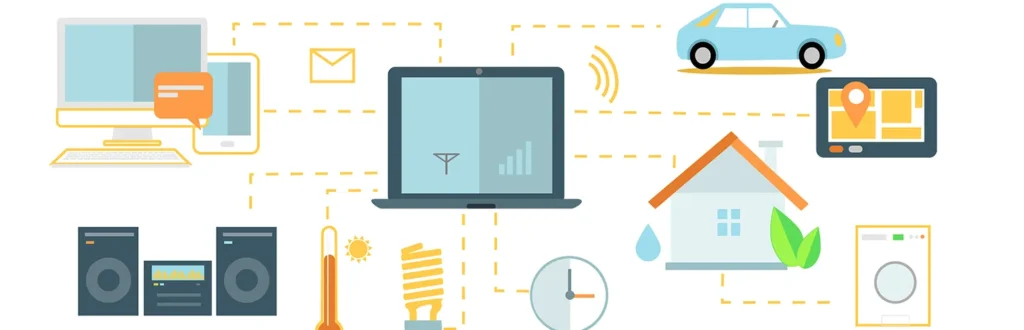
CableLabs, the non-profit innovation and R&D lab supporting the cable industry, is perhaps best known for developing the technologies that drive cable internet and television. For example, they’re the group responsible for developing DOCSIS, the technology standard capable of delivering gigabit broadband to communities across the country using existing infrastructure. More than just designing the nuts and bolts of internet and television technology, CableLabs is also thinking big on the futureof telehealth, driverless cars, virtual reality, and the internet of things, which, as a technology
More Viewers Try New Ways to Watch TV

As more and more Americans are taking advantage of streaming video on demand services like Hulu or TV Everywhere apps, television as we know it is being redefined. A big part of that revolution is which screens we use to access these services. While television sets aren’t going away, they’re no longer the only place to watch our favorite shows. According to new data from Leichtman Research Group, 43 percent of adults watch tv on non-tv devices like tablets, laptops and phones. That’s up from 33 percent in 2015 and 18 percent back in 2012. As our lives grow more and more connected, we fit
New From the Near Future: A Smarter Vision for Healthcare

This past May, attendees at The Near Future in Washington, D.C. were treated to talks from world-renowned technology, innovation, and business experts who presented on how technologies of the future will one day change how we live, learn, work, and play. They brought on stage the latest in virtual reality, augmented reality, holograms and artificial intelligence and shared how these technologies are already transforming the world around us. The event was inspired by a video, produced by CableLabs, that showcased emerging technologies once considered science fiction. On Monday, CableLabs
We Can All Agree on the Need for a Balanced Spectrum Policy

In an era of sharply divided views, it’s refreshing to see policymakers of all political stripes line up behind the idea that responding to this country’s mobile broadband needs requires the right balance of licensed and unlicensed spectrum. At a recent Senate Commerce Hearing on FCC nominations, many participants recognized the need for additional spectrum to support growing demand for mobile broadband. Several specifically pointed out the need for a balance of licensed and unlicensed spectrum to ensure that diverse services and business models in the wireless space all continue to thrive
New Data Shows Vast Majority of Evening Internet Traffic is From Streaming Media

Sandvine, a network policy company known for their deep research and insight into internet trends, recently released the 2016 Global Internet Phenomena Report. Among the many revealing broadband stats was one number that crystalizes just how significantly streaming content has changed how we use the internet. According to Sandvine, 71 percent of all evening internet traffic in North America is streaming audio or video content. This means that from a data volume perspective, Netflix, Hulu, Spotify, YouTube, and dozens of other popular streaming media sites are responsible for the vast bulk of