Diversity Programming Stands Out at the 2017 Emmys

Last night's 69th annual Primetime Emmy Awards marked another year where innovative storytelling and unique talent came out on top. But this year’s victories stood out a little more this time around. As many have noted since last night, the 2017 Emmy award winners have never been more diverse. Whether it was a lead actor or director from a minority group or a women-centric storyline that took the honors, there’s no doubt that this year’s Emmy-winning programs have made television richer and more vibrant than ever. In honor of and in anticipation of the industry’s Diversity Week next week, we’d
Diversity Week Is Right Around the Corner

Once a year in September, organizations, business leaders and thousands of executives gather in New York City to not only recognize the programming and initiatives taking place to advance diversity in the internet and television industry, but to put their heads together and participate in serious discussions about effecting change in this area. This year is no different, and with Diversity Week just a couple of weeks away, we anxiously await the WICT Leadership and NAMIC conferences, and the 34th annual Walter Kaitz Foundation Dinner on September 27, where last year the industry raised nearly
Sjoberg's: How a Small Internet Provider is Transforming Rural Minnesota

If you took a road trip out through rural Minnesota, you probably wouldn’t expect much could be going on in the tiny, wood-surrounded homes in the distance, or in the small farmhouses with the quartermile driveways. But as Dick Sjoberg knows, this is far from the truth. As the president of Sjoberg’s, the small, family-owned, internet, TV and phone provider serving northwestern Minnesota, Mr. Sjoberg has seen a lot in the business over the past several decades. Sjoberg’s customers come from communities with an average population size of 1,000, but some have no more than 50 people. Just like
New Report Says Fixed Broadband in the U.S. is Fast and Getting Faster

In their latest Speedtest Market Report, independent internet testing group Ookla reveals that the average download speed of fixed wired internet in the United States has increased from 47.1 Mbps to 64.2 Mbps over the last year. Average upload speeds have also increased over the same period of time, from 15.4 Mbps to 22.8 Mbps. In the report, credit for this increase goes to cable providers who, according to Ookla, are “making all the necessary investments and infrastructure upgrades to roll out DOCSIS 3.1 and to the increased affordability of higher tiered packages.” In addition to
Premium TV is Serving Up Choice, Value, and a Side of Fries

Today, you can watch TV wherever you are and on whatever device you want. But more than just being flexible and fun, premium TV is also available in a number of different packages, from a la carte to full suite bundles, which means there’s a way to watch for every budget. The graphic below highlights the many ways to access premium TV. And while no one option is perfect for everyone, it shouldn’t come as a surprise that the bundle is usually the best value. Learn more about how cable provides great TV value here.
Television’s Role in Supporting Diversity
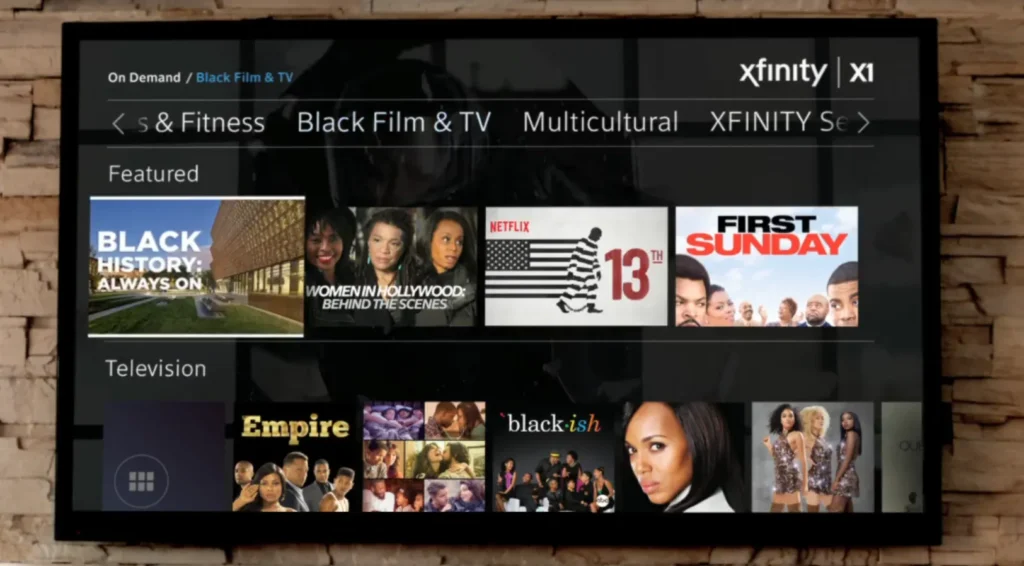
Like most things that make American culture rich, the success of premium television rides on the diverse voices and perspectives that come together behind the scenes and on the screen. Directors, producers, showrunners and cast members are hard at work looking for the best ways to represent America's array of viewers, and most importantly, to encourage acceptance and understanding of all types of communities across the country—all through innovative storytelling. With Hispanics as the second-largest ethnic group in the U.S., it's essential that networks like Univision and El Rey provide
Home Internet Equipment is Becoming More Energy Efficient

We have reached a point of digital ubiquity. We expect fast, reliable internet access, be it wired broadband, Wi-Fi, or cellular, wherever we go and whenever we want. But this phase of hyper-connectivity requires networking equipment working behind the scenes to keep us connected, and this equipment uses energy. That’s why in 2015 NCTA and the Consumer Technology Association (CTA) led the establishment of a voluntary industry agreement to improve the energy efficiency of small network equipment (SNE). The agreement, called the Voluntary Agreement for Ongoing Improvement to the Energy
Introducing NCTA’s New Website
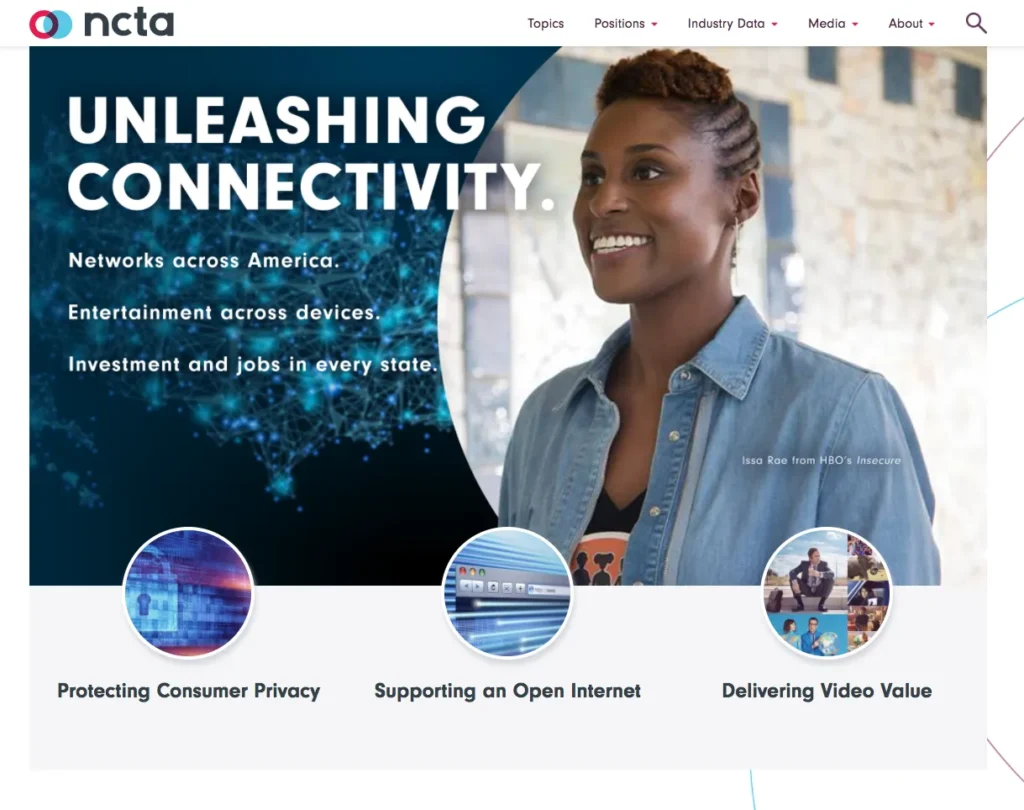
If you’ve noticed that something’s different at www.ncta.com, you are correct! This week, we’ve launched a new website that we invite you to explore. The new site is still chock full of information about the industry’s economic impact on America, stats and data about the internet and television marketplace plus background on a wide range of policy issues. However, there are some major changes to note. One of the biggest is that our former blog platform is no longer a separate site and the content is fully integrated into the new www.ncta.com. All of our content will still be here; we’re still writing
Taking a Moment to Celebrate America’s Workforce

Next week, Americans across the country will celebrate Labor Day, honoring the work, dedication, and contribution that each of us makes every day to move ourselves, our communities and our economy forward. As an industry, cable companies are prouder of few things more than their contribution to the American work force. In connecting the majority of American homes to high-speed internet and television networks, we’ve been able to create 2.9 million direct and indirect jobs leading to a $421 billion economic impact. To put that in perspective, every single Congressional district in America is
The Future of TV is on Any Screen