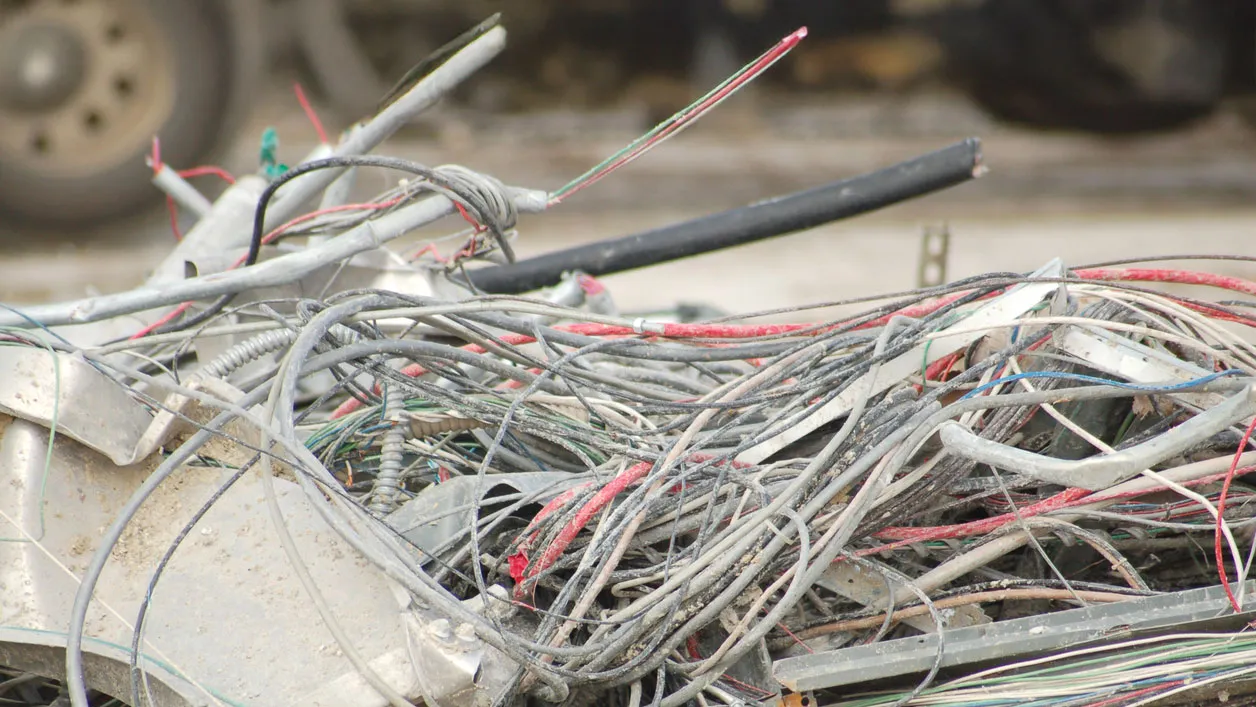
Criminal attacks on America’s broadband and communications networks are increasing in both frequency and impact. New data released today at the fourth Telecom Industry Summit: Protecting Critical Communications Infrastructure shows the problem is being driven by a combination of economic incentives, weak enforcement, and regulatory gaps.
Rising copper prices have made theft increasingly attractive to criminal networks, even as most modern infrastructure is fiber-based and contains little to no copper. Weak scrap metal oversight in many states allows stolen materials to be sold with limited documentation, and penalties for network destruction are often too low to deter repeat offenses.
The Numbers Tell a Stark Story
An updated report released at the summit reveals that over 18,000 incidents struck communications networks in 2025, disrupting service for nearly 12 million customers across the country. Provider-reported data shows a problem accelerating rapidly:
- 18,327 incidents nationwide in 2025
- 1,527 incidents per month on average, roughly 50 per day
- A 59% increase since 2024
- 11.8 million customers affected
California and Texas account for more than half of all reported incidents, with Los Angeles alone logging over 1,100 attacks last year. But this is a national problem, with the top 10 states by incident count spanning from Missouri to Washington to Georgia.
The Costs Go Far Beyond Repair Bills
In addition, an updated economic analysis by Dr. Edward Lopez reveals the full scale of consumer harm. In 2025, communications outages caused by infrastructure theft and vandalism imposed societal costs, borne primarily by consumers, of $294 million to $1.47 billion. That is many times the replacement value of stolen copper or damaged equipment. In California and Texas alone, the estimated costs reached $252.6 million and $97.4 million, respectively.
The economic ripple effects extend well beyond direct network users. When a network goes down, it disrupts:
- Emergency response and 911 systems
- Hospital networks, telemedicine, and medical device connectivity
- Business operations, remote work, and virtual learning
- Financial transactions and payment systems
- Airport operations, transit systems, and government facilities
Every outage touches not just those directly cut off, but everyone who depends on communicating with them.
Industry and Government Are Responding
At the summit, leaders from Comcast, Charter Communications, Verizon, AT&T, T-Mobile, NCTA, USTelecom, CTIA, ACA Connects, WIA, and other organizations gathered alongside representatives from public transit, hospitals, community safety organizations, police departments, and port operations, underscoring that this is a cross-sector challenge requiring a cross-sector response. FCC Commissioner Olivia Trusty delivered a keynote address at the event.
At the state level, more than 23 states have introduced legislation so far in 2026, and 13 have passed new laws strengthening protections for critical communications infrastructure. Colorado, Connecticut, Oregon, and Virginia adopted felony-level protections this year, building on a broader wave of state action in 2025 and prior years. States are also tightening scrap metal oversight, requiring seller identification, mandating electronic transaction reporting, and restricting cash payments for high-risk materials like copper telecom wire.
At the federal level, H.R. 2784, the Stopping the Theft and Destruction of Broadband Act of 2025, would close a critical legal gap by explicitly criminalizing willful or malicious damage to privately owned communications infrastructure. Currently, federal law protects government networks but leaves private broadband and wireless infrastructure without the same coverage.
What Needs to Happen Next
Summit participants called on policymakers, law enforcement, municipalities, and prosecutors to treat communications infrastructure attacks as the serious critical infrastructure crimes they are. Addressing this threat will require action on five priority areas:
- Strengthen scrap metal regulation – ban cash purchases for restricted metals, require seller ID and transaction records, and mandate reporting to law enforcement
- Harmonize state laws – close remaining gaps to ensure communications networks are consistently defined and covered under critical infrastructure protections
- Improve cross-sector coordination – align industry, law enforcement, municipalities, and policymakers around prevention, enforcement, and rapid response
- Prioritize prosecution – ensure theft cases are investigated, repeat offenders are pursued, and prosecutors have the tools they need
- Enhance penalties – update consequences to reflect the genuine public safety risks these attacks create
Greater enforcement, improved information sharing, and consistent accountability are essential to deterring repeat offenses and ensuring communities retain access to reliable broadband, wireless, emergency, and public safety communications.