
Are Better Wi-Fi Routers the Trick to 4k Streaming?

They sit dusty, untouched, crammed behind bookcases, slid under couches, forgotten in hallway closets. They don’t have screens, they don’t make sounds, and they don’t have apps. They’re Wi-Fi routers and they’re the unsung heroes, the silent workhorses, of broadband and they deserve a little attention – a little love. Without a good Wi-Fi router that’s not only properly rated for the amount of data it’s being asked to handle, but capable of working smoothly with multiple devices, you could be missing out on the full potential of your speedy Internet connection. Considering how quickly speeds
New Technology Has Family at the Heart of It

My first experience on the CES show floor has had me fazed, what with the myriad of toys and gadgets that the Internet of Things has to offer, but amid the chaos one curious theme stood out to me. In our world of new media and television that’s often geared toward customizing experiences for the individual, and toward creating the on-the-go connectivity and entertainment most of us demand, the sense of family and community still remains strong, and innovators are managing to embed this key element into the devices and home appliances of the future. Take Alcatel‘s new OneTouch tablet, Xess
The IoT: Turning Things On. And Off. And Then On Again.

With more than 170,000 attendees streaming through 3,631 exhibiting company booths that cover over 2.2 million net square feet of exhibit space at CES, you’ll have to forgive me if my brain (not to mention my feet) turn to mush within a few hours of wandering the show floor. Booths, devices, ideas all seem to blend together. Endless buzzwords and tech specs meld into indecipherable globs of marketing speech that flow in one ear and out the other. One way I keep everything straight is to play little games with myself. Today I was playing, “Can I find a booth that doesn’t feature something that
CES 2016: What We’re Looking Forward To

Buckle up. We’re about to hit four straight days of serious tech. Tomorrow morning, CES, the Consumer Electronics Show, kicks off in a strangely drizzly Las Vegas, Nevada. For those who don’t live and breathe in the digital biome, CES is an enormous technology convention delivering previews and deep dives into the gadgets and ideas that will define 2016. Now in it’s 49th year, CES has come to be an annual pilgrimage. Nearly 200,000 visitors descend on Vegas, ready to buy, sell, and generally geek out over everything from TVs to drones, routers to VR goggles. At that size, CES is big enough to
Taking Home Automation To a Whole New Level

Once upon a time, that thermostat on the wall was only for adjusting the temperature. The blinds had to be drawn with a pull-chord. Those lights had to be turned on with a switch on the wall. And that security camera recorded to videotape. But today, these objects could be running through a home automation system, often controlled through a smart phone and enabled by your Internet service provider. But these are just a few examples of how the Internet of Things and Wi-Fi enabled devices are changing our lifestyles. In fact, 37 billion smart products are expected on the market by 2020. A
CableLabs Report Concludes LTE-U Risks Disrupting Consumer Wi-Fi

Yesterday, CableLabs, the cable industry’s non-profit research and development consortium, published a blog that highlighted an important question that many in the tech policy community are talking about: Does the lack of effective politeness protocols in LTE-U technology risk disrupting consumer Wi-Fi and other devices that rely on unlicensed spectrum? In short, the conclusion was yes. As the blog makes clear, the LTE-U “specification” provides only a limited, half-page discussion of potential approaches to testing sharing but no actual sharing requirements. If this is LTE-U’s answer to
Keeping Bullies Out of Unlicensed Spectrum

We’ve all come to love Wi-Fi because it’s so easy to access, so easy to use, and so widely available. But thanks to a new technology called LTE-U, this could change. The unlicensed spectrum that Wi-Fi uses works so well because Wi-Fi and all of the other technologies utilizing it (think garage door openers and baby monitors) all follow politeness rules. They listen out for each other’s signals and take steps to avoid interference. These rules aren’t set in stone – they’re generally agreed upon because everything works better when everyone cooperates. But LTE-U, which also relies on unlicensed
What About Wi-Fi Two Years From Now?
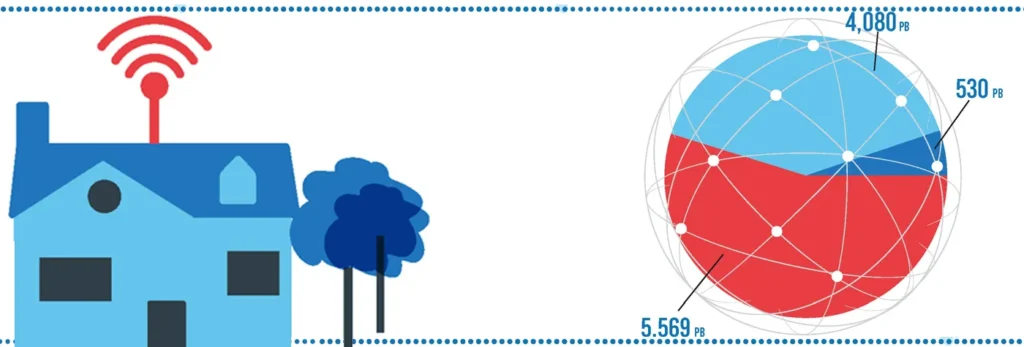
Within the next two years, it will be standard for the average home to have five devices connected to the Internet per person. For many homes, this benchmark was long ago. The infographic below conveys how TVs, smartphones, tablets and various types of technology will continue to expand and improve the efficiency of our daily lives through ever stronger, faster Wi-Fi. You can see the full infographic plus other stats and information on the future of Wi-Fi on NCTA’s Wi-Fi page.
The Internet of Things Isn't a Buzzword
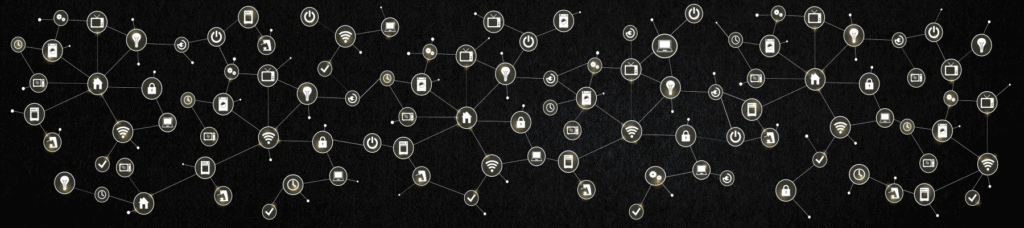
Today, technology that was once unimaginable is not only real, but it fits into our pockets. Devices like smartphones, tablets, and smart watches have made our ability to connect to the Internet and to each other incredibly easy. This is in large part due to growth in broadband networks and the near-ubiquity of Wi-Fi, but it's also an effect of the affordability and accessibility of ever smaller, ever smarter objects and sensors. This means we're heading towards a world where broadband connectivity isn't restricted to our computers and watches. It's free to be in our shoes, our coffee pots
The Future of Wi-Fi Depends on Unlicensed Spectrum

Today, the Senate Commerce, Science, and Transportation Committee is holding a hearing on wireless broadband and the future of spectrum policy. We expect the hearing to shed light on the incredible importance of unlicensed spectrum and how the future of gigabit Wi-Fi depends on good spectrum policy. Today, Wi-Fi is the most used broadband medium, handling more data than any other source – more than 5,500 petabytes of data per month in the United States. Making sure spectrum policy is keeping up with incredible Wi-Fi demand is critical to consumers, innovators, retailers and just about every