
What Cisco’s VNI Says About Connectivity in the Year 2021

The latest data from the 11th annual Cisco Visual Networking Index (VNI) Global Mobile Data Traffic Forecast (2016 to 2021) came out this month, and it’s safe to say that the projections all point to a surge in the Internet of Things, connectivity enhancements and internet speed improvements. As people around the world continue to rely on their smartphones, tablets and multiple connected devices inside and outside the home, we are surely in for the next level of connectivity in the years to come as internet service providers and technology innovators stay ahead of consumer demands. With the
Wi-Fi and Cars: Sharing the Spectrum Highway

Wi-Fi is so much a part of our connected society that most people say a week without Wi-Fi would leave them grumpier than a week without coffee. More than 85 million American households have Wi-Fi access points. And the number of Wi-Fi devices is even higher—more than a billion are expected to be in the marketplace by 2019. But this ever-growing demand for Wi-Fi has outpaced supply—as anyone who tries to get on the Internet in a busy Starbucks has probably discovered, Wi-Fi spectrum is quickly becoming congested. Wi-Fi relies on unlicensed spectrum—spectrum that is open for use by anyone
At CES 2017, Are Next-Gen Routers Getting the Attention They Deserve?
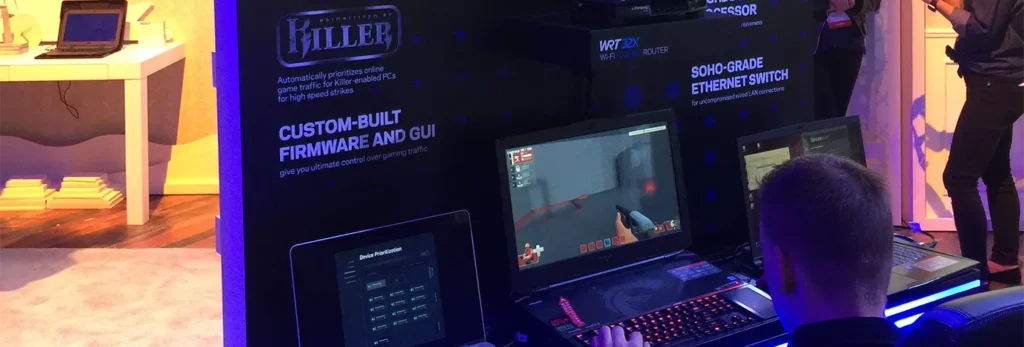
CES 2017 was packed to the rafters with everything technology. Drones, TVs, goggles, and thermostats. Robots, cars, cameras, and dishwashers. Search the internet for the best-of CES and you’ll see list after list of the coolest gadgets and the most unique toys. But what you might not see on those top-10s is internet routers. Though they were at CES, these unsung heroes of home broadband don’t normally get press coverage. After all, they do the boring, dirty, sometimes complex and difficult-to-explain work of connecting all of our devices to the internet. Their updates and improvements are
What We're Looking Forward to at CES 2017!

Another New Year, another trip to Las Vegas for CES – the Consumer Electronics Show. Put on by our friends at CTA, the annual technology bonanza is an opportunity for the world peek into the future and see what’s in store for digital devices in 2017 and beyond. On display will be everything from the latest TVs and web-connected devices to next generation washing machines and even cars of the future. For NCTA, it’s a chance to see what devices will be in the homes and offices of the not-too-distant future. We’ll be exploring tens of thousands of square feet of show space, asking ourselves,
How Many Connected Devices Does Your Home Have?
Looking around the house, have you ever noticed how many things are actually connected to the internet? The smart TV, phone, thermostat, laptop, refrigerator or maybe even your vacuum cleaner are all connected. The internet of things is here. So it’s no surprise that in a recent survey conducted by Morning Consult, 24 percent of respondents say they have between six and ten internet-connected devices in their home. Since that number is only going to get larger, it’s so important for internet speeds to continue to grow at their current fast pace, to support all those new gadgets. Just as
Good Wi-Fi Makes Happy Internet Users

The latest Morning Consult survey shows that 84 percent of respondents use Wi-Fi when connecting to the internet at home. It seems sort of obvious. How else would the dozens of web devices we’ve all come to rely on connect to the internet? Everything from tablets to smart dog dishes rely on Wi-Fi to stay online. But what’s remarkable isn’t so much the number of people who routinely use Wi-Fi, but how quickly it has become an almost ubiquitous connection tool and how satisfied people are with their overall Wi-Fi experience. It was developed in the early 1990s, but Wi-Fi was first used in a way
Cable-Tec Expo Showcases How New Technology Is Helping to Achieve Faster Internet Speeds

The gigabit life is upon us, and as more operators roll out this new class of internet speed to their customers, the DOCSIS 3.1 technology will play a major role in helping to deliver these new speeds to consumers far and wide. At the Society of Cable and Telecommunications Engineers’ annual Cable-Tec Expo this week in Philadelphia, cable operators and vendors gathered to discuss the capabilities of the technology and the work that lies ahead. DOCSIS is the standard technology that is used to provide internet access over a cable modem, and DOCSIS 3.1 is the latest version that is proven to
Public Wi-Fi Hotspots Hit 500,000
In addition to the Wi-Fi in our homes and offices, cable ISPs also offer secure Wi-Fi networks to customers outside of the home. These hotspots give you the ability to watch movies at the dog park, or get some work done at an outdoor café. And the best part? They’re offered at no extra charge. You may have never seen them, but they’re located in public places, often on electrical poles or street lamps out of sight. And according to The Cable WiFi Alliance, the number of these hotspots has just reached an impressive 500,000. That means more customers can experience near-ubiquitous broadband
Is the FCC About to Put 5G Deployment in the Slow Lane?

During a speech at the National Press Club last week, FCC Chairman Wheeler laid out a roadmap for how the U.S. can be the global leader in the next generation of wireless technology, 5G. The speech highlighted several steps the Commission intends to take over the coming months to pave the way for this new era of connectivity. But one proceeding that the FCC is currently pursuing – the FCC’s Further Notice on Business Data Service (BDS) – could in fact backfire and slow the deployment of 5G if the Commission stays on its current course. 5G networks will rely on substantially more cell sites
We Can Make Gigabit Wi-Fi a Reality

Fact of the day: more Internet traffic is carried over Wi-Fi than any other medium – more than wireline and wireless combined – and it’s increasing every year. So it’s fair to say the future of the Internet is the future of Wi-Fi. Wi-Fi was born in the unlicensed 2.4 GHz band that was once written off as “junk spectrum.” And the unlicensed nature of the band meant that the barriers to entry were low. Anyone with a good idea could launch a new wireless service as long as they played well with others in the band. As a result, the 2.4 GHz band has proven to be an unparalleled hotbed of innovation