
Business Data Services Are a “Textbook Example of What Not to Regulate”

In previous posts we have raised a number of concerns regarding the direction of the FCC’s rulemaking proceeding regarding Business Data Services (BDS). Tomorrow NCTA will file further comments demonstrating that there is no failure in the BDS marketplace justifying massive regulatory intervention, that the costs of new rate regulation almost certainly will outweigh the benefits, and that the extensive rate regulation proposed by some parties could seriously undermine competition and investment in this crucial segment of the communications marketplace. “Unwarranted regulation ‘can create a
Searching for the High Road on BDS Regulation

At the risk of encouraging another “sticks and stones” retort, we’re going to let most of Harold Feld’s latest screed go attacking us for “faux outrage,” “self-righteous sanctimony,” “acting like a 6 year old,” conducting a “non-stop whinefest,” and “smelling like a g*#@!? ashtray.” Maybe Harold was just having a bad day. Despite its rhetorical flourishes, what’s most notable from Harold’s post is that he offers no response whatsoever to the substantive concerns that were the core focus of NCTA’s blog. Specifically, we explained that regulating the BDS rates of cable operators and other
Let Some Fresh Air Inside the FCC’s Smoke-Filled Tent

According to a recent blog post from Public Knowledge executive and telecom pundit Harold Feld, negotiations to reach final rules for the FCC’s Business Data Services (BDS) proceeding are underway and he is encouraging AT&T to stop “throwing a hissy fit,” “read [] the writing on the wall,” and “come into the tent and negotiate.” While we have previously raised concerns about some of the strange statements coming out of Public Knowledge in the BDS proceeding, Feld’s post deserves a particularly close look. Specifically, in explaining why he thinks AT&T should join Verizon in negotiating a
The Internet of Things Lives on Wi-Fi

There are cable Wi-Fi hotspots across the country, and as their numbers continues to increase, the Internet of Things’ network will grow as well. Eventually, everything you own could be connected to Wi-Fi. But with everything getting connected to Wi-Fi, it is essential that we make more spectrum available for unlicensed use so that Wi-Fi can grow. By increasing the amount of spectrum that Wi-Fi can share, we can continue to expand the Internet of Things and increase the speed and capacity of our connected lifestyle.
Connecting to the Internet in the Year 2020

The world will gain about 1 billion new internet users and reach 4.1 billion in the next four years, according to Cisco’s VNI Global IP Traffic Forecast, 2015-2020, released earlier this week. This addition of new users will be accompanied by a significant growth in internet traffic by the year 2020, which shouldn’t be a surprise, given that we’ve experienced these types of patterns and increases in the U.S. alone over the past several years. The advances we have seen in technology and broadband speed have led to the rise of live video streaming and a digital-centric media landscape, one which
Who's Building the Next Gigabit City?

The gigabit trend in the technology space has been hard to ignore as of late, and Comcast, Cox, Brighthouse, Suddenlink, Mediacom, GCI, and Midcontinent, among others, are leading the charge. More and more providers are deploying gigabit services, some even offering 2-gigabit connections, and reaching customers nationwide. But why do we need gigabit services, and how would this Internet speed improve our quality of life anyway? The answer to this came about in several different ways at the Gigabit Cities Live conference, hosted by Light Reading, earlier this week in Charlotte, N.C.. While we
Who Has the Fastest Internet in the World?
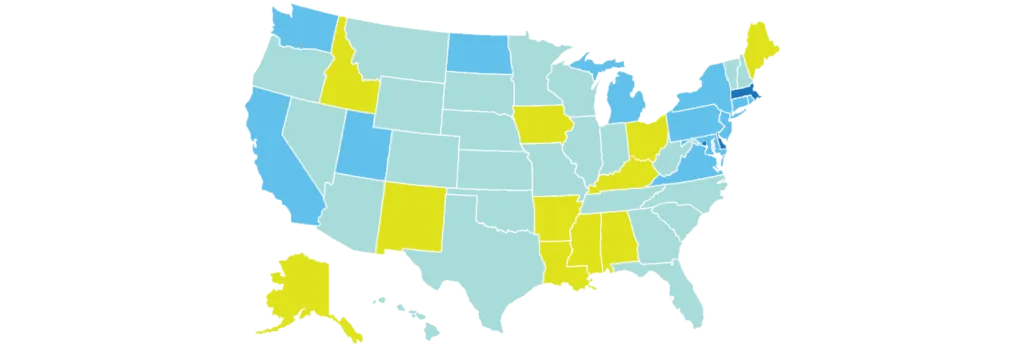
The results from the latest Akamai State of the Internet report are in and once again, 10 U.S. states rank among the top 20 fastest Internet territories around the globe. Delaware cracked the top five with an average peak speed of 88.3 Mbps, next to Singapore, Hong Kong, and South Korea. Akamai's report from the last quarter of 2015 found that U.S. average connection speeds reached 14.2 mbps, which is a 29 percent increase year-over-year, while the average peak connection went up 25 percent and hit 61.5 mbps. Overall, the findings show that people in the U.S. are experiencing faster Internet
Why We Go to SXSW

Once again, NCTA is attending SXSW. We go because we know that one of our most important roles is to find better, more effective ways to tell the story of America’s Internet and television innovators. SXSW is a unique convergence of creative and professional ideas that, in many ways, sets the tone for how the entire digital industry talks about itself. More than that, SXSW establishes how technology industries like ours contribute to the larger conversation of innovation, art, technology, and entertainment. This is a conversation we can’t miss. America’s ISPs have played a crucial role in
The Rise of the Virtual Reality Social Network

“Imagine being able to sit in front of a campfire and hang out with friends anytime you want. Or being able to watch a movie in a private theatre with your friends anytime you want.” That’s what Mark Zuckerberg posed in front of the Mobile World Congress last month as he discussed the future of Facebook and his plans to delve into virtual reality. Well, as it turns out, you can do all of that now, and you don’t necessarily need to go through costly hoops and high-end equipment to experience it. Mobile VR is making headway worldwide and game developers have been hard at work as they’ve taken
Better Technology Is Leading to Lower Costs

Imagine waking up tomorrow and your Internet connection reverted back to the year 2004, when average download speeds were in the single digits. Remember that? No doubt that you would be frustrated waiting 10 minutes or more for a video to download. And the near-total lack of live video streaming would not only provide few options but a frustrating and jittery experience. This lookback demonstrates how broadband speeds – and Internet experiences – have increased tremendously and rapidly. As the graphic below indicates, advances in network technology over the past decade have not only