
Industry's Energy-Saving Initiative Is Named Project of the Year

The cable industry serves millions of consumers every day through its delivery of high-speed internet and award-winning TV programming, but what's more remarkable is that it continues to provide its customers with these quality products and services while reducing energy consumption at the same time. The industry's various green initiatives, especially its Voluntary Agreements, are benefiting consumers through tremendous cost and energy savings. This hard work and its positive results recently gained recognition from Environmental Leader—a leading daily trade publication that covers energy and
From The Real World to Rural Broadband, Congressman Sean Duffy Shares His Insights
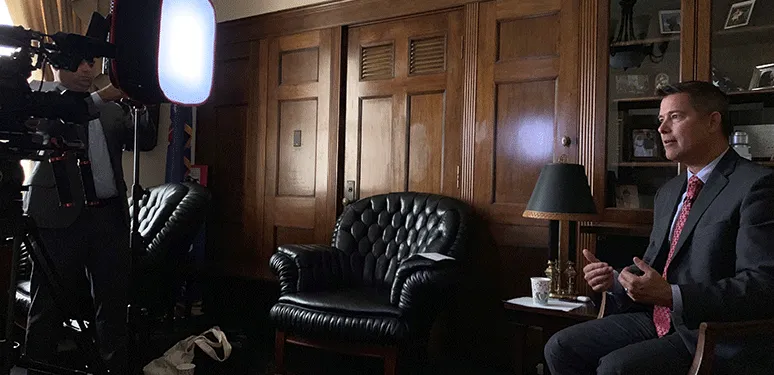
NCTA recently had the opportunity to interview Rep. Sean Duffy (R-WI), who gained fame long before his Congressional days when he started out on MTV's The Real World Boston in 1997. Duffy's career experience is unique in that not only did he get to be a part of reality TV when it was still in its infancy, but he also gleaned important lessons that he says still help him in his current role as the representative for the central and northern Wisconsin region. His stint with MTV also led him to star in a Road Rules: All Stars special, where he met his wife, Rachel Campos-Duffy, and with whom he
National Geographic's Science Fair Inspires the Next Generation

Next week, around 1,800 high school students from around the world will gather in Los Angeles to compete at the world-renowned Intel International Science and Engineering Fair (ISEF). It's quite the achievement for the many teenagers who come from all types of backgrounds to make it to the festival, and for those who will win prizes and scholarships for the innovative projects they present. Student projects turn into patents, and the festival is known to produce future award-winning chemists and Nobel Prize winners. Earlier this year at the Television Critics Association Press Tour, NCTA sat
IDEA Turns Immersive Media From Fantasy to Reality

Light field displays used to be a fantasy dream that audiences saw in science fiction movies, but today they are well on their way to becoming part of our lives. Behind the scenes, engineers like Arianne Hinds, principal architect and futurist at CableLabs, are helping to bring this and other futuristic experiences to users. Immersive technology displays that involve VR, AR, light field holodecks, and stereoscopic 3D are just around the corner. With 10G on the horizon—the cable industry's initiative to bring 10 gigabit speeds to homes—all of these interactive applications have the ability to
Securing our Home and our Networks in an Internet-of-Things Future

The IoT universe is exploding. All one has to do is look around and see the smart gadgets, wearables, cameras, and virtual assistants that populate homes and that people take with them on the go. The number of IoT devices connecting to broadband networks is already large, but nowhere near its peak. Technology forecasts predict there will be 22 billion internet-connected devices worldwide by 2025, triple the amount there are today. This explosion will bring consumers added value and convenience, however it also adds new complexity and security risks that could prove devastating to millions of
Connecting the Last 10 Percent of Americans

It’s easy to take for granted all of the possibilities that an internet connection provides. The majority of people rely on the internet to live their everyday lives, and it’s hard to imagine life without it. According to a recent Pew study, about 90 percent of Americans use the internet. That might not come as a shock, considering about a quarter of Americans (26 percent) say they’re online “almost constantly.” However, that still leaves 10 percent of Americans who don’t use the internet. So what’s keeping them from going online? First, it’s worth noting that the same Pew study in 2013 found
Gigabit Gains Popularity with American Consumers

With 80 percent of U.S. homes now having access to internet service offering speeds of 1 gigabit per second, American internet networks are continually reaching new heights. The good news is that consumers say they want to go along for the ride and the majority are now looking forward to joining the gigabit movement. That’s according to a recent Morning Consult survey which reports that over half of Americans today (55 percent) say they are interested in subscribing to gigabit speed internet service. The same survey asked consumers about the attributes they see important for future internet
Live TV Still the Biggest Draw for Younger Viewers, New Study Shows

It's no secret that younger generations today turn to their digital devices to help them in almost every aspect of their lives, and media and entertainment are no different. People can watch TV on their phones while on the subway, or catch up on an episode while waiting at the airport. But what's fascinating is that despite this new flexibility that technology and TV networks have provided in recent years, millennials still very much tune into live TV. According to Nielsen's first quarterly Content Ratings Benchmarks report, 81 percent of people in the 18-34 demographic who consume content
Is a Gigabit the Same as a Gigabyte?

Gigabit. Gigabyte. You've heard and seen these words before, but do you really know what they mean? Below is a quick crash course on bits and bytes, and what they mean for consumers. This is especially helpful as 10G—the industry's initiative to bring 10 gigabit speeds to American households and businesses—gets closer to becoming reality. The best place to start is explaining the difference between gigabit and gigabyte, or, in more rudimentary terms, bit and byte. A bit measures data transfer rates over a network. For example, a gigabit connection transmits data at one billion bits per second
Game of Thrones By The Numbers
Millions of people will tune into HBO this Sunday to watch the final season premiere of Game of Thrones. The massively successful series has inspired a concert tour, countless podcasts, and is even credited with increasing tourism to filming locations like Croatia and Iceland. After eight years, 73 episodes, and approximately 4,250 minutes of game-changing action, the song of ice and fire will finally go quiet. With the end on the horizon, let’s take a look at all the ways we can measure the Thrones impact. 128 The total number of Emmy nominations the show has received since it premiered in