
What Technology Do NASA and the Cable Industry Share in Common?

The 50th anniversary of the Apollo 11 moon landing has Americans all over the country in celebratory mode as people everywhere honor humankind's achievement through various events, gatherings, and TV specials. Years prior to the internet and digital era, that same voyage that brought fame to the names Neil Armstrong and Buzz Aldrin also gave the nation a taste of the amazing and innovative things to come as the U.S. space program's incredible technology paved the way towards a future where almost anything seemed possible. In fact, the cable industry’s ability to connect millions of homes and
Cable Continues to Dominate with 325 Emmy Nominations

The 71st Primetime Emmy nominations were announced earlier this week, and cable programming sure made a statement as the industry came away with a staggering 325 nominations. Cable is the clear front runner, ahead of all streaming and broadcast programming, as it goes into this year's Emmy Awards Show which will air in September. HBO led all networks with the most nominations at 137, as Game of Thrones snagged a whopping 32 of those nominations for its final season, followed by Chernobyl (19) and Barry (17). HBO also came out on top as the major studio with the most nominations. Game of
$450 Billion: What the Cable Industry Means to the American Economy

A new report shows that the significant economic impact made by America's cable industry has reached a new high of $450 billion, up $29 billion since 2017. The report from Bortz Media & Sports Group computed the industry's investments in next-generation broadband infrastructure that reaches nearly every community, the award-winning programming that continues to entertain and inform consumers everywhere, and the millions of jobs needed to build, create, and deliver innovative services. In addition to calculating the overall economic impact, the report states that the cable industry collectively
What Live TV Viewing Habits Say About American Consumers

Today's TV viewers are a mixed bag when it comes to their preferences for watching live TV on their own or in a group, as well as when it comes to what factors influence their decisions to do so, according to a recent Morning Consult poll. With the explosion of digital devices, streaming, and apps, it's easier than ever to pull out a phone or tablet to keep up with the news during work breaks, to catch that big game during the train commute home as the action unfolds in real-time, or to see the latest episode of Pose in the airport lobby before a flight. As the digital era gains momentum, so
Women's World Cup Champs Won Audiences on TV and Online

This year's FIFA Women's World Cup final between the USA and the Netherlands was a thriller, and the USWNT players weren't the only ones walking away with a victory. The TV networks that aired all of the matches experienced viewership highs during the last game, and record-breaking numbers during each stage of the tournament. FOX reached over 14 million viewers and peaked at nearly 19 million during the final match this past Sunday hosted in France, even with the game airing during a holiday weekend and in a non-ideal early time slot due to the time zone difference. The game is now the most
How Much is Digital Video Piracy Costing the U.S. Economy?

A new study estimates that the U.S. economy loses $29.2 billion every year as a result of global digital piracy. Impacts of Digital Video Piracy on the U.S. Economy was jointly conducted by the U.S. Chamber of Commerce, the Global Innovation Policy Center, and NERA Economic Consulting, and takes an in-depth look at how the proliferation of piracy devices and apps are not only delivering unauthorized programming over the internet and to TVs, but also outpacing the use of BitTorrent downloads in the piracy world. More than 80% of piracy is now attributable to streaming. For background, it's
Live TV Still Strong Among American Viewers
It's a pretty good time to be a TV viewer in today's rich and busy media and entertainment marketplace. TV has been completely redefined in every sense of the word. Cable programmers have invested over $430 billion over the past two decades to bring viewers the award-winning shows that they love, and there are more scripted programs today than there ever have been. Technology and fast broadband networks have granted people the flexibility to watch TV whenever, wherever, and however they want. This gives consumers a freedom and convenience that they didn't have before tablets or apps. But the
Smithsonian Channel Brings LGBTQ+ Experiences Out of the Archival Closet
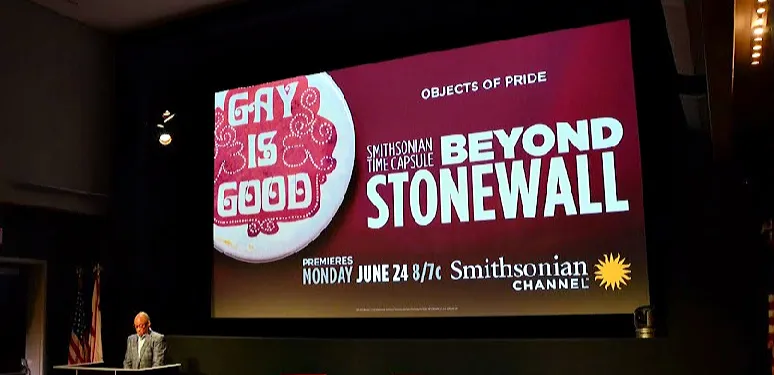
As the cable industry celebrates Pride Month, it’s worth noting that this week marks the 50th anniversary of the Stonewall Riots that shaped the LGBTQ+ movement as it is known today, starting from Christopher Street in New York City and spreading around the country. Stonewall, and the protests that followed, gave rise to the term “Pride,” the rainbow flag, and annual marches in New York City and around the United States. However, while the Stonewall Riots catalyzed change, the event was by no means the beginning of the LGBTQ+ movement. The team at Smithsonian Channel recognized this and set
On Screen Representation Matters Beyond Pride Month

Cable programming once again set a record this year for having the most LGBTQ+ characters on screen. According to the 2018-2019 GLAAD “Where We Are on TV” report, an impressive total of 208 LGBTQ+ characters were shown across the cable platform. Specifically, cable programming featured: 120 LGBTQ+ series regular characters – up from 103 last year; 88 recurring LGBTQ+ characters – up from 70 last year; and 95+ more LGBTQ+ characters than broadcast and streaming (which featured 113 and 112 characters respectively.) The report, which GLAAD has put out for the past 23 years running, sheds light on
GCI Turns Alaska into the 'First Frontier' with 5G Service

Alaska has some of the most remote regions in the United States, with formidable weather and vast terrain that make bringing connectivity to parts of the state a challenge and huge undertaking. However, through GCI's deployment of high-speed internet to these areas, the Alaskan provider has allowed businesses, entrepreneurs, schools, and hospitals to thrive, boosting the quality of life for many residents there. In 2011, GCI built the TERRA network over 3,300 miles of land, bringing terrestrial broadband to 84 communities. Then in 2016, GCI brought gigabit service to Anchorage, and from there