
Americans Still Prefer Their TV Sets to Phones

We live in a time where you can catch up on American Gods on the bus or take your binge of American Horror Story with you to check the mailbox. But even with small screens always a reach away, it turns out Americans still prefer to watch on a television set. According to new data from Nielsen, 92 percent of viewing time in Q4 2016 happened on a good old fashioned television set. It makes sense that when given the choice, people choose to watch on a larger screen, particularly as programming continues to become more cinematic. Mobile viewing is just that–mobile. Why watch the game on your phone
Per Person, What Is Cable's Impact?

Earlier this spring, we published a new report highlighting the tremendous impact of the American cable industry’s investment in broadband networks and TV programming. The report offers an in-depth view of key economic indicators from both a national snapshot down to every congressional district in every state. To help make sense of the numbers, we’ve highlighted the top ten states where the industry’s economic impact is felt the most. It’s no surprise that the ten states with the largest per person economic impact are also the states with the most direct and indirect cable jobs. After all
A Peek Into the Near Future of Healthcare

Last month, attendees at The Near Future in Washington, D.C. were treated to talks from world-renowned technology, innovation, and business experts who presented on how technologies of the future will one day change how we live, learn, work, and play. They brought on stage the latest in virtual reality, augmented reality, holograms and artificial intelligence and shared how these technologies are already transforming the world around us. Speaking at the event was Dr. Wyatt Decker, Vice President of the renowned Mayo Clinic and Emergency Physician, who highlighted how next-generation
NCTA President & CEO Michael Powell Talks Open Internet and Regulation on CNBC
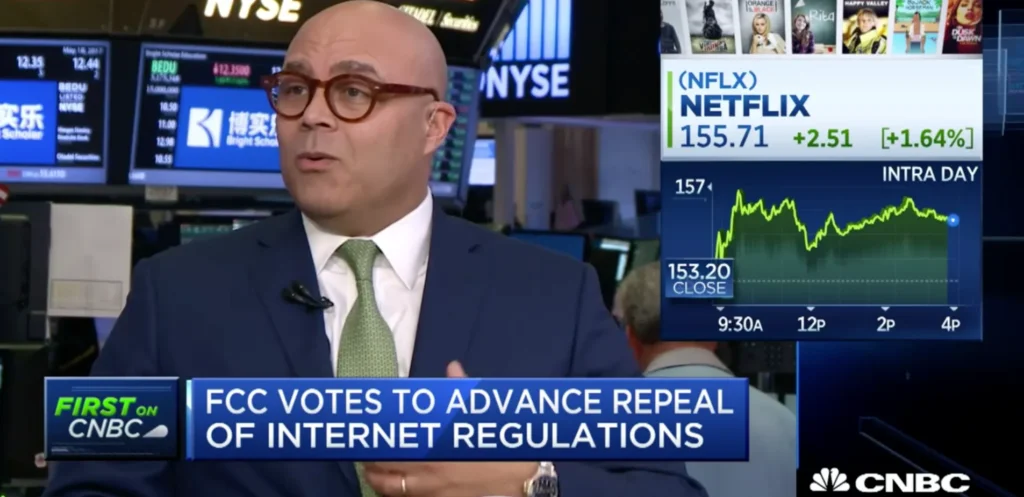
Following Thursday’s FCC vote to advance the Restoring Internet Freedom rule proposal, NCTA President & CEO Michael Powell appeared on CNBC to discuss what those changes could mean. As we’ve stated, our industry supports a free and open internet, and Powell explains how light touch regulation benefits both consumers and network providers. Click on the image below to see the video.
Reaffirming Our Commitment to an Open Internet

Tomorrow, the FCC will begin the latest chapter in what is now a decades-long debate about the appropriate regulatory framework for the modern internet. One of the many things that this raging debate obscures is that there is substantial agreement on basic principles of behavior that promote an open Internet experience for consumers. In general, consumers are and should be in charge of the internet experience. So long as their conduct is lawful and subject to a provider’s reasonable network management, internet users should have the freedom to go anywhere on the internet or to run any
Most Americans Satisfied with Home Internet & TV Service

Connectivity has become ubiquitous with our daily lives, making the consumer experience even more important than ever. Given how often we connect, problems that might have been small ten years ago can impact how we work or entertain ourselves. So we’re happy to report that, according to a new poll out from Morning Consult, a vast majority of Americans are satisfied with their at-home internet service and the value of their TV packages. More specifically, 74 percent of those surveyed said they are satisfied with the quality of their home internet connection, and 73 percent are satisfied with
Bipartisan Consensus is "Light Touch" the Right Approach for Internet Regulation

Another battle in the decade-long saga over internet regulation has erupted in Washington. After spending so much time with these issues, it can be hard for us to remove ourselves from the daily skirmishes, and listen to what actual consumers think about these issues. That is why NCTA conducted a survey with Morning Consult to take the consumer temperature on the issue of internet regulation. And while politics may be as divided as ever in our country, consumers share a strong bipartisan consensus that the government should let the internet flourish without imposing burdensome regulations. The
How Holograms And Bots Will Change The Way We Learn
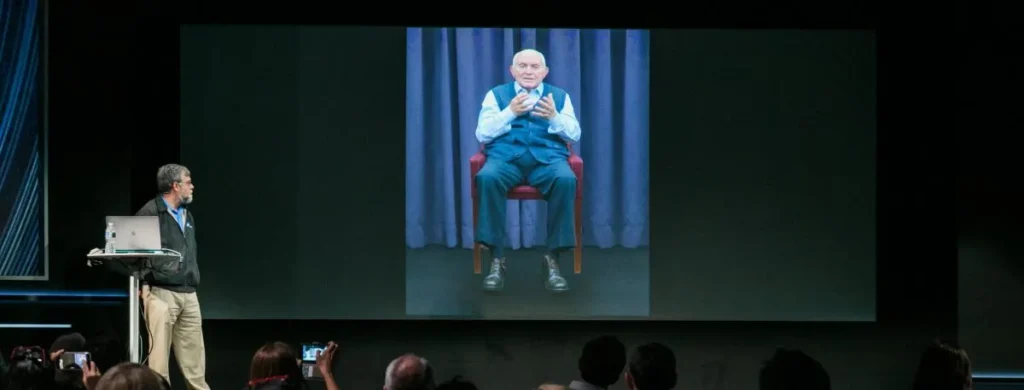
What if you could learn physics directly from Albert Einstein himself, albeit via hologram, or get fast, personalized and cost-effective tutoring from a bot who will answer your questions instantly from an app on your phone? Better yet, what if we told you that these scenarios are already in their experimental stages, and preparing to forever impact education? At The Near Future event held in Washington, D.C., recently, conference participants were introduced to technology creations that are about to transform the way we and future generations learn in a really big way. David Traum, director
The Near Future is Just Getting Started

Last week, policymakers and technology innovators gathered at The Near Future event in Washington, D.C., where attendees tried out and caught a glimpse of the exciting virtual reality, augmented reality, and technology experiences to come or that are currently in their infancy. The conference may be over, but the Near Future is just getting started, waiting to meet us around the corner and to lead us into a future with endless possibilities. Every day, new technology and media experiences are launched that, as The Near Future conference emphasized, will forever change the way we LIVE, LEARN
New Data Reveals Internet and TV's True Economic Impact

Measuring the economic impact of an industry means calculating all of its angles. It means considering factors like, how much money does that industry invest? How many jobs does it create? How does the industry’s investments affect local economies? In an attempt to put a finger on the remarkable impact internet and television companies make, NCTA, along with Morning Consult has put together a new tool that allows anyone to search state-by-state or even district-by-district to see the economic value that network providers instill in communities across the country. The biggest story from this