
ISPs Commit To An Open Internet

Recently, member companies of Broadband for America placed a full-page ad in the Washington Post to reaffirm our strong commitment to an open internet and to delivering a fast and vibrant online experience to consumers.
Tell Congress to Make Net Neutrality Permanent
With Title II, the FCC has imposed heavy new Internet regulation that goes far beyond widely supported net neutrality protections. Title II will increase consumer costs, slow investment and innovation and cause years of uncertainty. But Congress can step in. Bipartisan legislation can protect consumers while promoting the investment needed to continue expanding and improving America’s broadband networks. Let's choose a future that embraces progress, not expensive regulations.
Twitch and the Draw of Gaming Culture

As broadband speeds have increased, the home gaming experience has benefitted. That combined with improved latency means that gaming is more accessible than ever. In fact, 62 percent of U.S. households include at least one gamer, and the appetite for gaming related content is clearly reflected by the huge success of the website Twitch.tv. So, what exactly is Twitch? Twitch.tv is a video platform devoted to gaming. Specifically, it’s a place for people to watch live streams of gameplay, walkthroughs of difficult levels, live broadcasts of professional gaming tournaments, and tons of other
Happy World Wi-Fi Day!
Today is World Wi-Fi Day – an opportunity both to celebrate Wi-Fi’s extraordinary success and to ask ‘where does Wi-Fi go from here?’ Since its humble beginnings in the “junk bands” in 1985, Wi-Fi has become an integral part of everyday life, keeping people connected at home, at school, and at the office. For many, Wi-Fi is synonymous with Internet access. That’s no wonder when you consider that Wi-Fi carries the vast majority of U.S. wireless traffic. Cable’s public Wi-Fi networks alone support 2.5 billion active sessions and carry 169 petabytes of data per month. The unlicensed spectrum
Getting To Gigabits

For the better part of two decades, cable internet providers have focused on building, operating, and improving the physical infrastructure that supports high-speed, consumer internet service. Over two decades and four iterations of a technology platform called DOCSIS, cable internet providers alone have invested over $250 billion in private capital to build speed at a scale that extends to 93 percent of American households. But the work is far from done. As consumer demand for internet service continues to explode, so too must the capabilities of wired and wireless networks. That is why cable
Ten U.S. States & DC Rank Among the Fastest World Internet Speeds

The results from the latest Akamai State of the Internet report are in and once again, 10 U.S. states and D.C. rank among the top 20 fastest internet territories around the globe. Delaware cracked the top five with an average peak speed of 111 Mbps, next to Hong Kong and South Korea. National rankings are reflective of infrastructure and technology, but are also heavily impacted by basic geography. A country by country comparison would pit a country like Singapore, which covers about 678 Km2 against the U.S. which comes in over nine million Km2. Which is why it makes more sense to look at it
Dear Harold Feld

Last week, Harold Feld published a blog on the Public Knowledge website called “NCTA Proves Virtuous Cycle Works.” Since it isn’t every day that Feld (or PK) agrees we’ve proven anything, I decided to check it out. Let me start by commending Feld for acknowledging what many other advocates willfully ignore: broadband in America has continuously gotten better and faster over the past two decades while providing consumers more bang for their buck. Feld even cites with approval an NCTA blog post quantifying the ever-increasing U.S. broadband speeds and the fact that consumer prices have fallen
Next Steps For The 3.5 GHZ "Innovation Band"

As demand for mobile broadband spectrum continues to increase and existing resources become more and more congested, the FCC and industry have looked for new ways to share and improve the efficiency of spectrum. The 3.5 GHz band is poised to become a prime example of innovative, efficient spectrum use, where three types of users—government and satellite incumbents, mobile licensees, and Wi-Fi-like devices—coordinate their operations using a sophisticated spectrum access system (SAS) database. After receiving the FCC’s green light last year, the cable industry and many others have already begun
America's Internet Speeds Continue to Soar

Every quarter, Akamai releases a State of the Internet Report. This study is a widely accepted third-party evaluation of not just the health of the overall internet, but a comparison of states, regions, and countries’ internet speed, adoption, and security. Earlier this week, Akamai released its 2017 1st Quarter report and it revealed that on a number of key metrics, the internet in the United States took a huge leap forward compared to other countries. The US is now in the top ten countries for adoption of internet speeds over 15 and 25 Mbps as well as the top ten for overall average speed
How Fast is America's Internet?
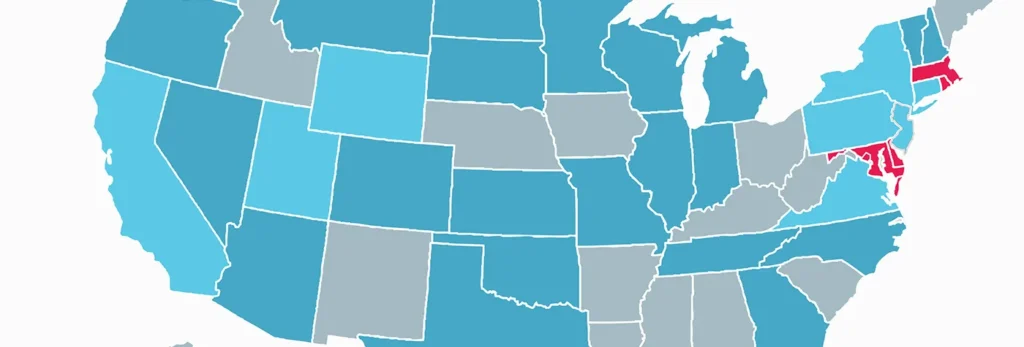
Every year technology gets better. Devices become less expensive, software improves, and of course the internet gets faster. How much faster? According to the latest Akamai State of the Internet Report, the over the last year the peak average internet connection speed in the United States has gone from 67.7 Mbps to 86.5 Mbps. This is a 28 percent increase, a remarkable jump in speed in just one year. And America’s fastest region, Delaware, has a peak average internet speed of 111 Mbps making it the sixth fastest region on earth. New to the top states list is Wyoming, America’s least populated