With the 2026 midterms just a week away, C-SPAN is bringing voters closer to the candidates in some of the country’s most competitive House, Senate and gubernatorial races.
Through Road to the Capitol: Candidate Coverage from the Trail, a first-of-its-kind initiative launched this summer, C-SPAN has embedded multimedia journalists in battleground regions across 12 states: Maine, New Hampshire, North Carolina, South Carolina, Georgia, Michigan, Ohio, Iowa, Nebraska, Texas, Alaska and Kansas.
Their coverage airs nationally across C-SPAN’s platforms, and every event they record is also shared free of charge with local newsrooms in those states. Together, the national airing and the free sharing give voters a closer look at the candidates on their ballots and help stretched newsrooms cover more of the campaign.
NCTA recently visited C-SPAN’s Washington office to talk with the team behind the project.
Filling a Growing Video Void
C-SPAN has long aired key House, Senate and gubernatorial races for a national audience, relying heavily on local news outlets for footage of debates and candidate events.
But as local outlets have closed, shrunk or scaled back video, there has been less footage to go around. C-SPAN CEO Sam Feist has called it a “video void,” with many campaign events and town halls going unrecorded.
“As those local newsrooms were either closing, getting smaller, changing the way that they were doing video coverage, our content was also getting smaller,” said Rachel Katz, C-SPAN’s manager of strategic partnerships and distribution.
But the team saw a bigger opportunity than filling its own schedule. “How can we help in those states for the people who are actually constituents in that state,” Katz said, “to make sure that they’re getting as much information from their local news as they can get?”
That’s where Road to Capitol comes in. C-SPAN’s journalists, along with partners at Spectrum News, capture campaign events from start to finish, and every video is archived in the C-SPAN Video Library as a permanent public record.
Local, nonprofit and independent newsrooms that join get all of it, plus clips and transcripts, to use however works for their audiences. Currently, more than 65 local partners and 160 journalists are registered.
A Win for Voters and Local Newsrooms
The sharing model is built to serve two audiences at once: viewers following the national balance of power, and voters who rely on their local outlets before casting a ballot.
“There’s the double hit there of the national audience being able to see all this and seeing who’s campaigning where and who’s campaigning together, and what are they saying,” Katz said. “And then the local media being able to get that for their constituents who are using them as their resource when deciding who to vote for.”
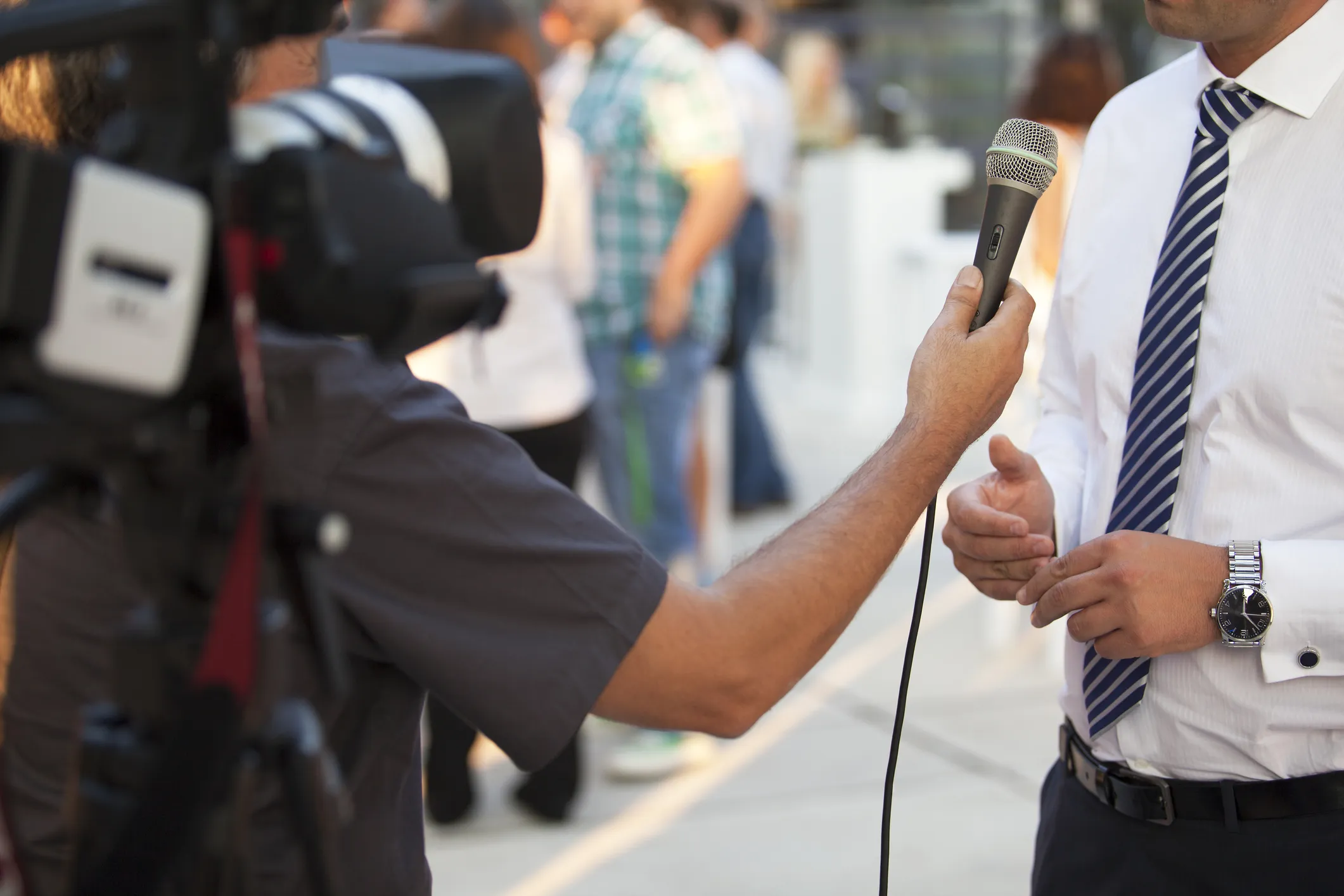
For smaller newsrooms that can’t follow candidates across an entire state, that access matters. At many events, C-SPAN’s journalist is the only video camera in the room. “It allows them to go to a different event because they know they’re getting all the live coverage from us,” Katz explained.
It’s a win for C-SPAN, too. The program marks a first for the network as it seeks revenue beyond the license fees it receives from distributors. Generous funding from the Knight Foundation, MacArthur Foundation, Carnegie Corporation, Ford Foundation and More Perfect has enabled C-SPAN to put more journalists on the campaign trail than ever before.
“What’s new about this particular project is that it kind of turbocharges that on-the-road aspect,” said Andrew Nason, regional coverage manager at C-SPAN. “And so that turns into a win, win, win.”
Thousands of Miles on the Trail
Since the first journalists hit the ground in late June, C-SPAN has covered more than 400 campaign events and expects to reach about 500 by Election Day.
Covering that many events means a lot of time on the road. C-SPAN’s journalist in North Carolina and Georgia estimates he has logged 16,000 to 18,000 miles, regularly crisscrossing from North Carolina’s 1st Congressional District on the coast to southern Georgia.
Candidates have noticed. “I’m thankful for C-SPAN to come and cover these,” said Scott Brown, the Republican Senate candidate in New Hampshire. “I’ve had so many people from around the country say: hey, I saw you.” Ohio Democratic Senate candidate Sherrod Brown called the coverage “a real service to the country.”
Some candidates have even spoken directly to the camera. In Michigan’s open Senate race, Democrat Abdul El-Sayed had asked Republican Mike Rogers to debate. At an event with Detroit faith leaders, he turned to the C-SPAN camera: “I know we’re on C-SPAN, Mike — if you’re watching: anytime, anywhere, on any issue.”
Through Election Day, C-SPAN’s journalists will stay on the trail, carrying on the public service mission the cable industry founded C-SPAN on in 1979.
Full video of every Road to the Capitol event is available to watch on C-SPAN.org.