
Cartoon Network Speaks Up on Bullying Prevention

Bullying affects people at every stage of their lives, but those most vulnerable to it are the ones who experience it in America's school yards. Last year, Cartoon Network commissioned a survey and found that two thirds of kids experience bullying once or twice throughout their youth. In support of National Bullying Prevention Month in October, NCTA talked with Cartoon Network Senior Vice President of Marketing and Partnerships Jill King to find out how the network makes this issue a vital part of its mission to serve America's children. It's been eight years since Cartoon Network launched its
Measuring the Impact of Cable's Energy-Saving Innovation

On National Energy Efficiency Day, it's important to take measure of the benefits to consumers and the environment that are being delivered by the cable industry's energy-saving initiatives. Earlier this year, an audit conducted by D+R International found tremendous energy and cost savings thanks to two Voluntary Agreements signed by major service operators, pay-TV providers, manufacturers and energy efficiency advocates. Since the award-winning Voluntary Agreement for Ongoing Improvement to the Energy Efficiency of Set-Top Boxes was implemented in 2013, consumers have saved more than $3.5
America's ISPs Are Bringing Rural America Up to Speed

Tomorrow, the Senate Committee on Commerce, Science, and Transportation will hold a hearing to explore the opportunities and challenges of deploying broadband in rural America. This is an issue that America's cable broadband providers are currently tackling, and a critical discussion that will explore creative ways to continue connecting every community. The conversation is also a timely one in light of recent discussions concerning the Farm Bill reauthorization and how broadband funds should be administered by the USDA Rural Utilities Service in order to be most effective in helping to bring
Cox Pledges $20 Million Annually Towards Broadband Adoption

Internet adoption programs are reaching more Americans than ever and helping them lead their best lives while giving them the skills and tools they need to compete in the global marketplace. And they got another boost yesterday when Cox Communications announced that the company is increasing its commitment to $20 million annually for Connect2Compete. Cox's CEO Pat Esser made the announcement yesterday along with the release of survey results that measured the impact of the program and how Cox will continue to expand it to more Americans. The survey of 1,700 families revealed that 91 percent
New TV Shows Aim to Connect With Hispanic Audiences

Hispanic Heritage Month is underway, and there's no better time to turn attention to the portrayal of Hispanic-Americans in media and entertainment. Previous studies and polls have shown that America's viewers need and want more diversity in the characters and stories that they see on the screen. And while there is still a long ways to go, there have been a few breakthrough shows in the past couple of years where Latino culture is recognized, celebrated, and embraced. Newer shows have also focused on the complex issues of Latino identity in the U.S., and the stereotypes, struggles and
Sit Back and Enjoy the Show: TV is More Competitive Than Ever Before

The choices for TV today are virtually endless. As America's demographics and technology have evolved over the past two decades, so have the number of ways that TV is delivered to consumers, and the diversity of programming that audiences have available to them. Where cable television used to stand alone, technology advancements along with fast broadband networks have ushered in a myriad of new online TV distributors—and with it, an ever-growing menu of choices. Since 1997, cable networks have invested more than $410 billion in award-winning content. At the same time, new and emerging
Charter's Trials in Wireless Technologies Will Bring More Coverage to Unserved Areas

Over the past two decades, cable broadband providers have invested over $275 billion in building robust high-speed broadband networks that power the online experiences for millions of Americans every day. As a result, more than 90 percent of U.S. homes now have hyper-fast connectivity, but there are still areas where there is not sufficient access to high-speed broadband. To continue closing this gap, ISPs are hard at work looking for innovative ways to bring fast and reliable internet to such communities. Charter Communications—which spans 41 states and has invested more than $27 billion
TV Time is the Best Time

Thanks to brilliant innovations in technology over the past few decades, video is everywhere. Gone are the days of crowds forming in front of electronics stores to watch breaking news; now there is a near-ubiquity of screens and connectivity. Creators have new formats to explore, the video marketplace is more competitive than it’s ever been, and some of the highest-quality programming ever is now being produced as a result. With all the changes we’ve seen, it might be surprising to learn that, according to the latest Nielsen Total Audience Report, the average American adult spends four hours
Preparing Our Networks for Light Field Displays and the Future of Education
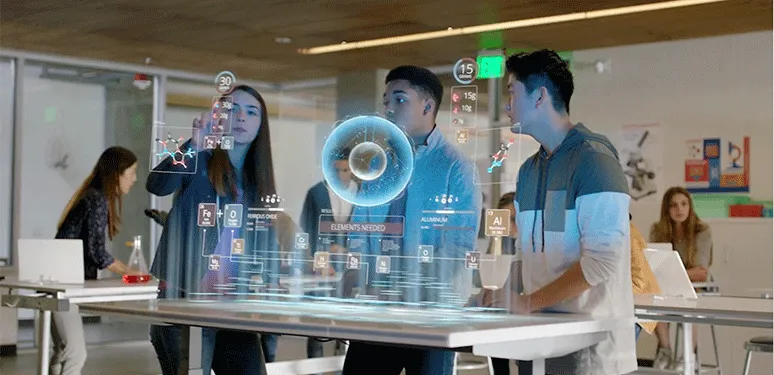
Imagine going to school and conducting a virtual chemistry experiment with lab scientists 3,000 miles away. Or coexisting in a virtual meeting space with colleagues who, instead of dialing into a video conference call, can feel as though they are working together in the same room. In the latest video from CableLabs' Near Future series, light field displays are featured prominently and viewers get a peek into how people will interact with media in the future and how it will impact the future of education. Arianne Hinds, principal architect and futurist at CableLabs, gave NCTA insight into where
Celebrating the Best in TV at the Emmy Awards

Last night's 70th Primetime Emmy Awards lived up to its promise to showcase the diverse menu of choices that viewers have on television today, and the inspiring stories that keep them coming back for more. In total, together with the Creative Arts Emmys, cable programming drew the most wins with 65 out of 126 awards (in 122 categories), followed by streaming services with 38 and broadcast with 23. To no one's surprise, HBO collected multiple accolades. Game of Thrones took the title for Best Drama Series for season seven, and for Best Supporting Actor in a Drama for Peter Dinklage. (Fans