
Broadband Stats: America’s Fast Internet Speeds

Over the last year, Americans have moved more of their lives online. Accelerated by the COVID-19 pandemic, many offices are now embracing hybrid work models, and at the same time new advancements in entertainment and gaming like augmented reality and virtuality reality are starting to take off. Despite the surges in internet traffic that these new habits and technologies are causing, America’s broadband networks are ready for whatever the future holds. Compare that to the global average of 99 Mbps, and it is clear the United States is in a strong position to handle whatever the future has in
Why Cable ISPs are Invaluable to Advancing Telehealth Services in the Home
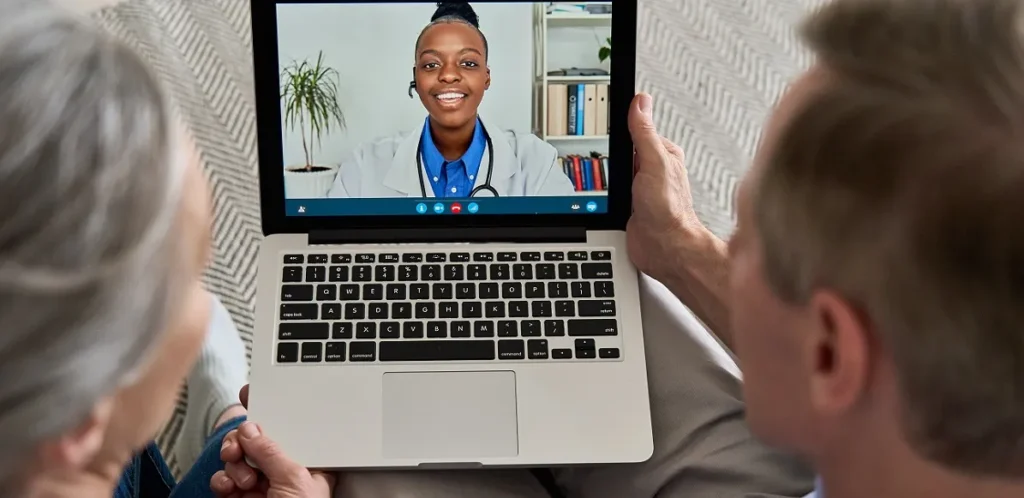
While the concept of telehealth had long been around prior to March 2020, the COVID-19 pandemic was undoubtedly a catalyst for the widespread adoption of the practice. In fact, adoption for this form of healthcare delivery among Medicare recipients jumped by 10,000% over a six-week period during state lockdown orders, according to a new study. Never before had a broadband connection proven to be more critical in healthcare than when millions of Americans connected online from home during the pandemic to meet with healthcare professionals. Telehealth firms like Cox's Trapollo kept patients and
Five Ways 10G Will Transform Today's Technologies and Applications

Cable internet service providers have invested billions of dollars into continually upgrading their networks, and over the past couple of decades that has translated into increased speeds and access for millions of people in the United States. In fact, over 80% of cable customers have access to gigabit speeds. And since the cable industry’s announcement in 2019 about the 10G initiative, cable operators have been working towards rolling out 10 gigabit speeds to households all over the map and making steady progress on deploying this next-generation service. But what will 10G look like in
Measuring the Monthly Value of a Broadband Connection

More than ever before, the past year has shown that a broadband connection is invaluable for Americans to continue working, learning, and socializing. And connectivity demands will only continue to increase as technologies advance and more services move online, making an internet connection a "must have" in the home. Fortunately, the cost of a monthly internet subscription only takes up a small part of average household expenses, according to the Bureau of Labor Statistics. When considering the limitless possibilities that a broadband connection unlocks for consumers, the value of today’s
A Time to Celebrate Wi-Fi Progress While Building Towards the Future

This Sunday marks World Wi-Fi Day, and there is a lot to celebrate about the technology that has transformed the way people connect and made invaluable contributions to the global economy. Wi-Fi has proven especially critical over the last year, as we all adapted to working and learning from home and keeping in touch by phone and video. According to Plume, the number of Wi-Fi devices connected to home Wi-Fi networks increased dramatically beginning in mid-March 2020, in some markets over 100% over pre-pandemic levels, which enabled business, education, healthcare, and social interactions to
Broadband Data: Connecting Every American
In today's world, an internet connection can make a huge difference in a person's life. But long before the COVID-19 pandemic accelerated the rate at which our lives moved online, America's internet service providers offered special, low-cost broadband adoption plans like Connect2Compete and Internet Essentials so that everyone could participate. In fact, over the last decade, more than 14 million customers connected to the internet via these discounted offerings. When the COVID-19 pandemic hit, work, school, and social lives were forced to move online. That accelerated need to get connected
The Consistent Success of LGBTQ Inclusive Shows

June is LGBTQ pride month, a time to celebrate and reflect on progress made for LGBTQ people and a time to take a look at where things could be better. Over the last 25 years, GLAAD, a nonprofit that advocates for better LGBTQ representation in the entertainment world, has tracked the number of LGBTQ characters on TV. In that time, the amount of representation on screen has expanded far beyond those first years. That progress of getting LGBTQ characters on screen is an important step, but only the first one in creating a space for authentic queer stories. GLAAD has issued challenges to the TV
A Look Back at Remote Learning as the School Year Wraps up

June marks the start of summer, which also means the end of the school year and graduation celebrations. Millions of students and teachers had to adapt to a new style of academic instruction as classes went virtual when the COVID-19 pandemic forced schools to close their doors in March 2020 and for a large part of the past year. While many schools reopened and offered hybrid learning plans this past spring, it's worth taking a look back at America's first year of remote learning and the lessons gleaned as graduates leave their respective schools to start on new paths and students get ready for
C-SPAN Has an Eye on the Future
For over 40 years, C-SPAN has brought the halls of Congress into American living rooms without interruption or commentary. From its launch in 1979 to today, the network has stood out among its peers for the unique way it operates and approaches news coverage. After a year of a global pandemic and a historic election, the network, like so many other teams, are looking to the future through a new lens. When the COVID-19 pandemic hit, C-SPAN crews were already tirelessly covering the election from candidacy announcements to the first primaries at the start of the year. So when social distancing
Outdoor Access to Unlicensed Spectrum in the 5.9 GHz Band Will Support Next-Generation Wi-Fi

Last fall, the FCC took a major step forward for Wi-Fi when it voted unanimously to open up the lower portion of the 5.9 GHz band for indoor unlicensed use. As Wi-Fi demand has grown, so has the need for wider channels and for more unlicensed spectrum bandwidth to support the ever-evolving digital needs of Americans. This compromise decision also preserved the upper portion of the band for new automotive safety innovations and updated the rules so the auto industry can deploy the latest technologies. Although this bipartisan decision is a win for both American consumers and automotive safety