
What Last Week’s Political Debate Says About TV Viewership and Digital Coverage

While last week’s Republican prime-time debate on Fox is now old news, the fact that it was the most-watched nonsports event in cable-television history says something about politics and TV-viewership – namely that political debates still hold a very important place on television and in the political process. According to Nielsen, 24 million viewers watched the debate, which is more than double the average crowd that tunes into AMC Networks’ The Walking Dead (10 million viewers per episode), also known as the most watched series in cable television history. “The way we view television and
Behind The Numbers: Growth in the Internet of Things

The Internet isn’t merely developing, it’s exploding, and the numbers prove it. Take a look at our graphic below — it shows the advancing surge of connected devices using the Internet. Today, there are more connected devices than there are human beings on the planet. This expansion isn’t just from cell phones, tablets and computers – it’s thanks to toothbrushes, stovetops and millions of other devices that now have IP addresses. Estimates show that there will be over 50 billion connected devices by 2020. Fast, ubiquitous Wi-Fi and increasing home broadband speeds will drive the Internet of
The Internet of Things Isn't a Buzzword
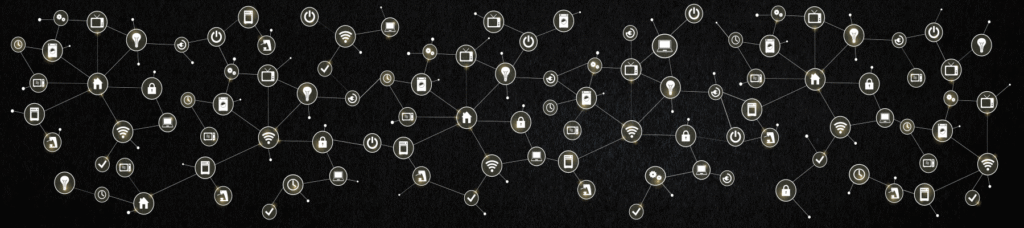
Today, technology that was once unimaginable is not only real, but it fits into our pockets. Devices like smartphones, tablets, and smart watches have made our ability to connect to the Internet and to each other incredibly easy. This is in large part due to growth in broadband networks and the near-ubiquity of Wi-Fi, but it's also an effect of the affordability and accessibility of ever smaller, ever smarter objects and sensors. This means we're heading towards a world where broadband connectivity isn't restricted to our computers and watches. It's free to be in our shoes, our coffee pots
How to Launch and Grow a New Cable Network

New cable networks don’t pop into existence at random. There’s a process. Cable gives birth to new networks in a variety of interesting ways. There’s the buyout technique, in which one network purchases an existing channel and launches in its place. That’s what happened when Al Jazeera America assumed Current TV’s spot on the channel lineup in 2013. There are networks that spin off from existing channels, such as TeenNick, and FXX, sibling of the FX Network. Then there’s perhaps the most challenging method – starting a new network from scratch. Channels like Revolt TV, the music channel from
Adobe Offers a Peek into the Future of TV Everywhere

I recently talked with Horia Galatanu, senior product manager for Adobe, to learn more about Adobe’s role in TV Everywhere, how the TV Everywhere model is evolving, and where the future of the business is going. Read on for a few highlights from the interview. FD: What do you do for Adobe in regards to your contribution towards TV Everywhere? HG: I manage the product formerly known as Adobe Pass TV Everywhere, now known as Primetime[customers include Turner, ESPN, NBCU, Fox, Disney, Viacom, and Comcast]. I manage the authentication part for Primetime, which connects the programmers to a system
How Comcast’s Partnership is Helping to Close the Digital Divide in Connecticut
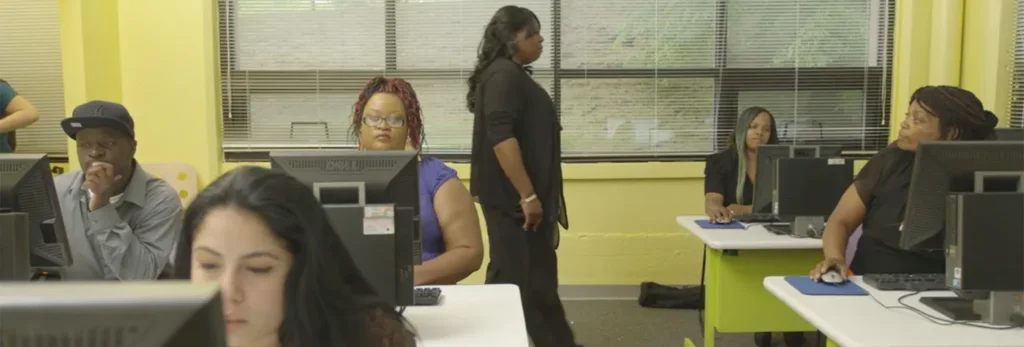
These days, it’s hard to imagine life without the Internet. If you need to know how far away Pluto is from Earth, you “Google” it. If you’re at the hot new restaurant in town, you Instagram a photo of your dinner. If you need to deposit a birthday check from Grandma, you use your bank’s mobile app. But there are still millions of people not online. According to the Pew Research Center, a third of those non-internet users (34 percent) do not go online because they think the internet is not relevant to their lives. They are either not interested, do not want to use it, or have no need for it
New Set-Top Boxes Delivering Energy Savings and Reducing Tons of CO2 Emissions

In today’s hyper competitive pay TV marketplace, cable, satellite and telco TV providers are in a constant state of innovation, working hard for their spot in the connected home. These companies know that consumers are constantly connected and to remain a welcome part of entertainment centers, devices need to be energy efficient. That’s why, in the first two years of the voluntary set-top box energy conservation agreement (VA) among pay-TV industry, consumer electronics manufacturers and energy efficiency advocates, we’re proud to report that the effort has resulted in over $500 million in
Update on Small Internet Equipment Energy Efficiency Commitment

The Steering Committee for the new voluntary agreement announced in June to improve the energy efficiency of Internet modems, routers and other residential broadband equipment has conducted its first meeting and taken important first steps to implement the agreement. The agreement sets rigorous requirements that will improve the energy efficiency of small network equipment (SNE) by 10 to 20 percent compared to typical, recently-deployed devices and cover more than 90 percent of U.S. broadband households – roughly 80 million homes. Signatories to date include service providers AT&T, Bright
Why We Support CISA

Yesterday, along with 46 other trade associations, NCTA signed and submitted a letter to Congress urging support of the Cybersecurity Information Sharing Act (S. 754), also known as CISA. As the Protecting America’s Cyber Networks Coalition, our fellow trade associations and we are dedicated to both securing the personal information of individuals and our nation’s critical infrastructure and protecting the privacy and civil liberties of all Americans. That’s why we support CISA, a bill that allows voluntary real-time sharing of cyber threat indicators while ensuring robust privacy protections
Cable in Europe: Where It Is Now, Where It’s Going

I recently chatted with Caroline van Weede, Managing Director of Cable Europe, a trade association that connects leading cable operators and national cable associations within the European Union. Van Weede explained some of the fundamental differences between the cable industries in Europe and the U.S. FD: Can you tell me a little bit about the make-up of Cable Europe? CvW: Cable Europe is an association with around 24 members. Since Europe is made up of individual member states, each country has its own set of cable operators–its own regulators, governments, and national cable associations