
What Generates the Most Internet Traffic in Your Household?

If you live in the average internet household in North America, you likely have multiple connected devices at your fingertips, which you use for a variety of purposes when going online. A new report released by Sandvinegives us a glimpse into our internet usages and patterns inside the home, and how they might differ based on the device we are using. The 2016 Global Internet Phenomena: Inside the Connected Home report found that North American households on average have seven internet connected devices, with the Windows PC (above mobile devices, game consoles, set-top boxes and SmartTVs)
How Satisfied are Americans with Their Home Internet?

A new survey on home internet provider satisfaction reveals the vast majority of Americans are satisfied with the quality, price, speed, and reliability of their wireline broadband. The internet entertains, informs, and connects. It builds businesses, it improves healthcare, and it drives creativity. In other words, it’s a very busy platform and it has grown exponentially over the last 25 years to better serve the billions of people who use it every day. So, in an effort to better quantify exactly how well America’s ISPs are doing at delivering the internet, we commissioned an independent
Comcast Celebrates Five Years of Connecting Families with Internet Essentials

It all started five years ago this very month in Chicago when Comcast connected the first low-income families to the internet through the launch of the Internet Essentials program. Fast forward to 2016, and Internet Essentials has spread to many cities across the United States and brought 750,000 low-income households on board, according to their five-year progress report released last week. That’s three million more individuals armed with the power of the internet and its ability to improve lives and open up new economic opportunities. A survey of Internet Essentials customers reports that 95
A History of Speed as the World Wide Web Turns 25
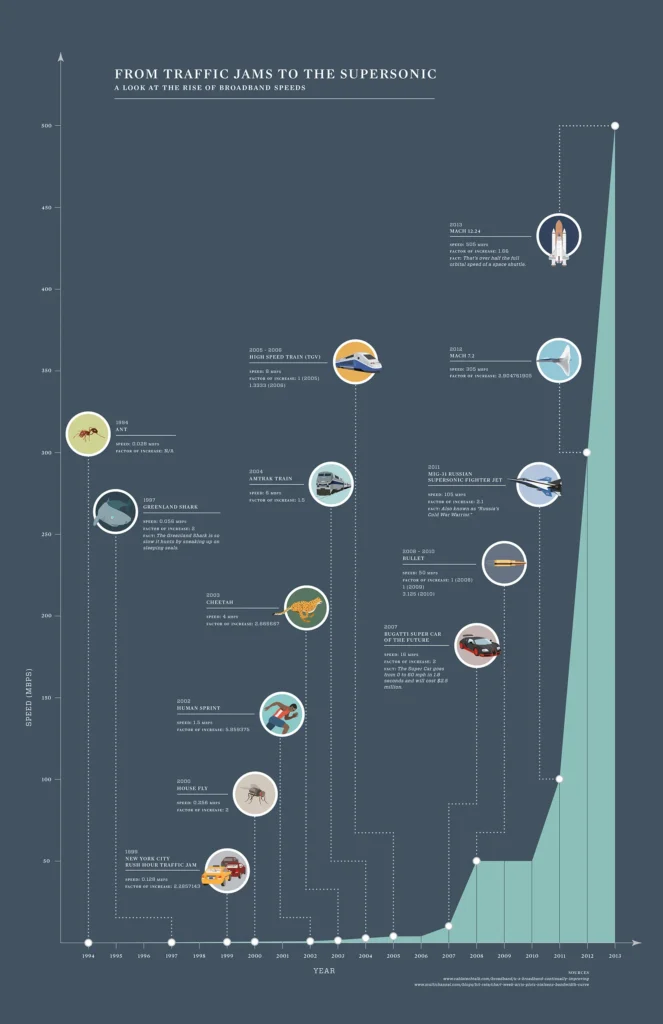
This week marks the 25th birthday of the World Wide Web. Though there had been networks of computers within research institutions and defense agencies, access was restricted. But on August 23, 1991 CERN opened its network to the public, establishing the World Wide Web. Since then, the internet has grown up quite a bit. In 2016, residential cable connection speeds are topping out at 2 Gbps. To understand how large that growth is, we’ve put together a handy graph that helps put these internet speeds into perspective. For more information, be sure to check out our pages on America’s Internet
The Surprising (and Not-So Surprising) Results of a New Streaming TV Survey
NCTA commissioned a new poll from Morning Consult which revealed many more Americans are watching TV on devices other than a television. The poll asked key questions on programming preferences, device usage, and the importance of watching live TV. 36 percent of poll respondents say they have never used a device to watch TV other than a television, leaving a full 61 percent who say they use a device like a computer, tablet, or smartphone to watch TV at least once a month. We’re pleased to see so many people taking advantage of non-traditional TV devices. It’s a sign that TV Everywhere efforts
How Did You Watch the Rio Olympics?

The results are in from the 2016 Summer Olympics, and aside from the remarkable achievements of the many American athletes who dazzled audiences around the world, NBCUniversal also snagged a few victories of its own with its coverage of the competition in Rio. According to Nielsen, 78 percent of U.S. TV homes tuned into NBC Olympics Rio Games coverage. This year’s coverage also earned the silver medal for garnering the second-highest primetime average audience on record for any non-domestic Olympic Summer Games. NBC’s Olympics coverage, which spanned 15 days of the competition, reached an
The Data is in and U.S. Internet Continues to Get Faster

For the first time, US broadband download speeds are averaging over 50 Mbps. Ookla, the world-trusted independent source for broadband speed data, released a report earlier this month revealing a huge fixed broadband speed jump. This represents more than a 40 percent increase from this time last year. The three fastest ISPs, as evaluated by Ookla, were XFINITY, Cox, and Spectrum (the ISP formed by the merger of Charter, Time Warner Cable, and Bright House). According to Ookla, broadband speeds are ranked “based on top 10 percent performance which is determined using the 90th percentile of the
#ICYMI: A New Vlog Helping Families Make Smart Media Decisions

There’s always a new app, a fun new show to binge on, and a new way to connect with family and friends. At this point, it’s impossible to always know what your kids are watching or what they’re doing online. But, the good news is that you don’t have to know the ins-and-out to make sure your kids are being smart and safe in the virtual world. Our website, ControlWithCable.org, is a great place to learn how to engage your kids in important conversations about media, and how to set parental controls to manage their access. You’ll also find a video blog series called #ICYMI (In Case You Missed It)
How Do Independent Networks Stand Apart in Today’s TV Environment?

During the cable portion of the TV Critics Association tour in Los Angeles last week, TV shows of all kinds – big budget shows with superstars, documentary series on social issues, visually stunning dramas and more – were given a first look by critics. While many people spend hours watching HBO’s grand dramas or sports on ESPN, the big takeaway is that there is now a variety of network programming for everyone, regardless of age, special interests or background. In 2015 alone, networks large and small invested over $35 billion in programming to meet the varied interests of consumers everywhere
Home TV and Internet Equipment is Becoming Much More Energy Efficient

As our lives have increasingly become more connected to all forms of media and we seem to constantly rely on devices or gadgets throughout our waking hours, managing energy consumption has become a significant priority, both from an environmental and economic perspective. The good news for pay TV and internet consumers is that the equipment we use to enjoy these services has become much more energy efficient, both reducing your home’s carbon footprint and energy bill. Two new reports by independent auditor D+R International, one on set-top box energy usage and one on residential internet